
Vera2, Investigations & Corruption
Epstein scandal: Republicans Struggle with Fallout as House Investigation Deepens
Nov
Epstein scandal: Republicans Struggle with Fallout as House Investigation Deepens
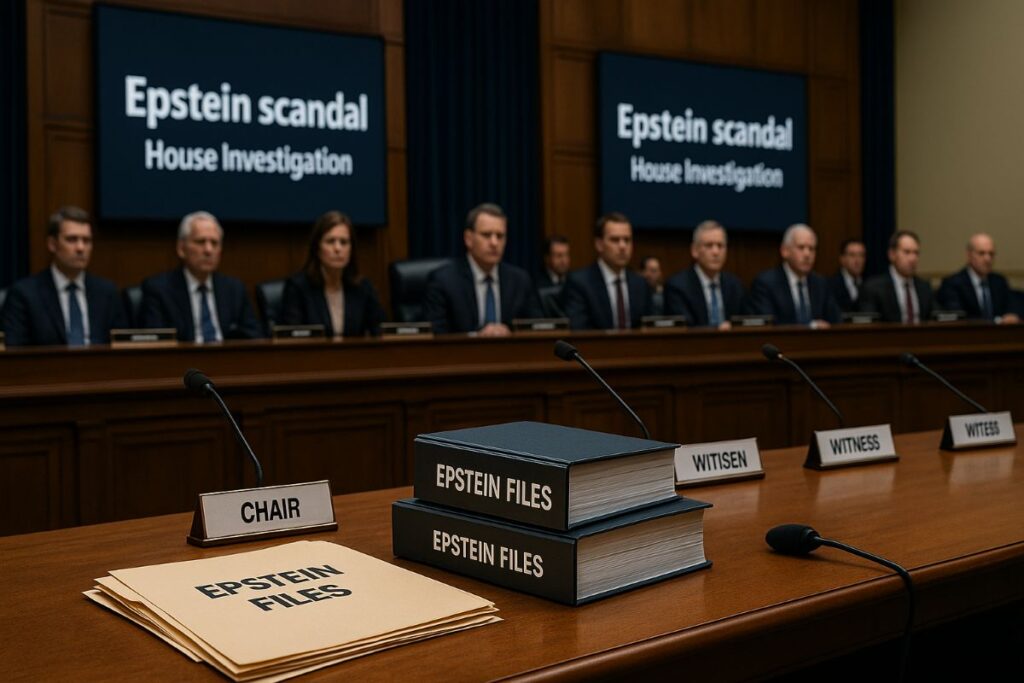
The Epstein scandal has roared back into the center of American politics, and this time Republicans are the ones on the defensive. What began as an effort by GOP leaders to assert control over the House investigation and frame it as a transparency push has instead exposed deep internal divisions, raised fresh questions about Donald Trump’s past ties to Jeffrey Epstein, and handed Democrats a ready-made line of attack heading into 2026. The Epstein scandal is no longer a distant embarrassment from another era; it is an active, evolving crisis with real consequences for the Republican Party’s credibility and electoral fortunes.
How the House investigation reignited the Epstein scandal
The current storm was triggered by the Republican-led House Oversight Committee’s aggressive push for documents. Chair James Comer subpoenaed the Justice Department and the Epstein estate for tens of thousands of pages of records, including material tied to Epstein’s 2007 non-prosecution agreement, the 2019–2020 indictments, and the circumstances surrounding his 2019 death.The Washington Post+2Oversight Committee+2
In theory, this was supposed to be an opportunity for Republicans to champion transparency, suggest prior administrations had failed victims, and undercut critics who accused the party of minimizing Epstein’s crimes. Instead, the document releases have been messy and politically risky. The Oversight Committee has already dumped more than 50,000 pages of records from the Justice Department and Epstein’s estate, including previously unseen emails, flight logs, and internal correspondence.Oversight Committee+1
As journalists, legal experts, and activists pore over these documents, new details have emerged about Epstein’s attempts to monitor and leverage his relationships with powerful figures. Recent releases include emails showing Epstein tracking Trump’s movements in late 2016 and referencing his past access to Trump’s social circle.The Guardian+2The Independent+2 These findings have ensured that the Epstein scandal remains firmly in the headlines, complicating any Republican attempt to claim the investigation is purely about justice for victims and not about politics.
A political gambit that backfired
Strategically, many Republicans assumed the hearings and subpoenas could be framed as an indictment of the “establishment” writ large—Wall Street, elite universities, and both parties’ past leaders. For a base that sees itself as betrayed by institutions, the Epstein scandal looked like an ideal symbol of elite impunity.
But the timeline has not cooperated. In mid-2025, the Justice Department and FBI released a memo stating they had found no evidence of a secret “client list” or blackmail operation, and that Epstein died by suicide, conclusions that angered conspiracy-minded activists on the right as much as anyone else.Wikipedia At the same time, fresh records began to show that Trump’s name appears in investigative files and that federal officials had privately warned him about it.Wikipedia+2The Washington Post+2
House Democrats then seized on these disclosures, releasing additional materials and holding media-focused events that tied Trump more tightly to the scandal, even as they insisted their main aim was transparency.PBS+2Le Monde.fr+2 The result is that the GOP’s original narrative—that it was forcing others to confront Epstein’s legacy—has flipped. The Epstein scandal now looks, to many voters, like a test of whether Republicans are willing to hold their own side accountable.
Republican divisions laid bare
The most striking consequence of the current House probe is how openly it has split Republicans. On one side are lawmakers close to Trump and leadership allies who worry that uncontrolled document releases could produce more damaging headlines just as the party is trying to consolidate power. On the other side are libertarian-leaning or populist Republicans who argue that secrecy only fuels suspicion and that victims deserve full disclosure, regardless of where the chips fall.
That divide crystallized around a discharge petition led by Rep. Thomas Massie, which forced a House vote on the “Epstein Files Transparency Act” to compel release of unclassified Justice Department records.Wikipedia+2Le Monde.fr+2 GOP leaders initially resisted, warning privately that the White House viewed support for the petition as a “hostile act.” Yet several Republicans—including Massie, Nancy Mace, Lauren Boebert, and Marjorie Taylor Greene—signed anyway, joined by more than 200 Democrats.Wikipedia+2Newsweek+2
Speaker Mike Johnson has tried to thread the needle, admitting publicly that the Epstein case is “not a hoax” and promising some level of transparency while also maneuvering to limit intra-party conflict.Reuters+2The Guardian+2 But every procedural delay, recess, or partial disclosure reinforces the perception that Republicans are improvising rather than leading. For a party that brands itself as tough on crime and protective of children, the optics around the Epstein scandal are especially toxic.
Conservative media and messaging chaos
Conservative influencers have reacted in a predictably fragmented way. Some right-wing commentators have tried to downplay newly released emails in which Epstein claimed Trump “knew about the girls,” arguing that Democrats are cherry-picking out of context messages to smear the president.Reuters+2Axios+2 Others have leaned into full transparency, insisting that any Republican who blocks the release of Epstein files is betraying the grassroots and protecting elites.
This public split feeds a broader messaging problem. When different factions of the same party are describing the Epstein scandal as, alternately, a “hoax,” a tragic failure of the justice system, or a necessary reckoning even if it hurts Trump, voters see confusion and self-interest rather than principle. That dynamic is especially dangerous among independents who already view Washington through a lens of cynicism.
Why the Epstein scandal keeps coming back
Part of the Republican problem is that the Epstein scandal refuses to behave like a normal political story. It contains elements of elite misconduct, systemic failure, and genuine horror that transcend party lines. Epstein’s 2008 plea deal in Florida, his circle of wealthy and powerful acquaintances, and the unresolved questions around his 2019 jailhouse death all feed a sense that someone, somewhere, got away with something.
This year’s Justice Department memo insisting there is no “client list” and no evidence of blackmail was meant to settle some of those questions, but it satisfied almost no one.Wikipedia Skeptics on the right and left alike see it as a narrowly tailored legal conclusion rather than a full accounting. Every new batch of files, like the recent trove of more than 20,000 pages of emails and records, simply reopens old wounds, especially when it contains fresh references to Trump and other well-known figures.The Guardian+2Reuters+2
In that sense, the Epstein scandal is less a single event than a rolling crisis of trust. Each partial disclosure—whether from the House, the DOJ, or the Epstein estate—raises the question of what still has not been revealed. Republicans who thought they could ride this wave to score points against Democrats and the Biden administration are now discovering that waves don’t care who tries to surf them.
Survivors and transparency advocates at the center
Lost in much of the partisan crossfire are the survivors themselves. Advocacy groups and survivors who have appeared at hearings and press events have consistently framed their demands in simple terms: release the files, protect victims’ identities, and demonstrate that no one is above the law.youtube.com+1
That message resonates across party lines. When newly sworn-in members of Congress make signing the discharge petition their first act, and when bipartisan coalitions form around transparency bills, it reflects the moral pressure created by the Epstein scandal.New York Post+1 Republicans who try to reduce the issue to a partisan talking point risk appearing indifferent to that moral dimension.
Electoral risk for the GOP heading into 2026
The timing of the current House showdown is brutal for Republicans. As the 2026 midterms loom, the party is already navigating voter anger over inflation spikes, culture-war fatigue, and concerns about democratic norms. The Epstein scandal adds another layer of vulnerability: the perception that the party is willing to shade the truth or look the other way when politically convenient.
For hardcore Trump supporters, nothing in the Epstein files is likely to change their votes. The danger lies with swing voters and soft Republicans in the suburbs who are tired of drama and ready to punish any party that looks chaotic or untrustworthy. If Democrats can credibly argue that Republicans tried to suppress or spin the House investigation into Epstein, that narrative could stick, especially among college-educated voters who closely follow news about institutional misconduct.
At the same time, the Epstein scandal threatens internal cohesion. Lawmakers who back full disclosure may face primary challenges from pro-Trump factions, while those who defend the White House line risk being painted as anti-transparency. This is the opposite of what party strategists want heading into a cycle where every seat could matter.
How Republicans could limit the damage
The GOP still has options, but none are painless. The clearest path is to embrace genuine transparency, support the full release of non-classified Epstein files with appropriate redactions, and commit to a bipartisan process for reviewing any remaining materials. That would not erase the political damage, but it would allow Republicans to argue they ultimately prioritized accountability over self-protection.
Another option is to shift the focus from individuals to systems: frame the Epstein scandal as evidence that plea-bargain practices, federal oversight, and elite influence need reform, and back concrete legislation to tighten rules around sex-trafficking cases and non-prosecution agreements. Doing nothing—and hoping voters grow bored—is the riskiest strategy, because each new leak or document dump will make the party look reactive rather than responsible.
What to watch next in Congress
In the short term, the next key moment will be the House floor vote on releasing additional Justice Department files, set up by the discharge petition that crossed the 218-signature threshold.AP News+2WZTV+2 The vote tally will reveal how many Republicans are willing to defy leadership and the Trump White House in the name of transparency.
The Senate is likely to remain a choke point. Senate Republicans have already blocked one attempt to attach an Epstein-files transparency provision to the annual defense bill, signaling their discomfort with turning the scandal into must-pass legislation.AP News If the House passes a standalone transparency act, it could die quietly in the upper chamber, leaving activists and survivors furious and prolonging the life of the controversy into 2027 and beyond.
Meanwhile, journalists will continue to sift through the tens of thousands of pages already released, drawing out storylines that Republicans cannot fully control. As long as fresh revelations are emerging, the Epstein scandal will remain a slow-burn threat to the GOP’s brand.
Bottom line
The House investigation that Republicans once hoped would showcase their commitment to transparency has instead magnified the Epstein scandal and exposed serious fractures within the party. Document dumps, internal memos, and newly released emails tying Epstein’s world to Trump have ensured that this is not a problem that can be dismissed as a “hoax” or blamed solely on past administrations.The Guardian+2Reuters+2
How Republicans respond in the coming months will shape not only the fate of the House investigation but also the party’s standing heading into 2026. If they treat the Epstein scandal as a matter of loyalty tests and partisan spin, they risk deepening public cynicism. If they accept short-term embarrassment in exchange for full disclosure and real reform, they might yet begin to close one of the most disturbing chapters in recent American political life.
Further Reading
The Guardian – “Epstein emails: key takeaways from 20,000 pages of newly released files”
https://www.theguardian.com/us-news/2025/nov/13/epstein-files-key-takeaways The Guardian
Associated Press – “What’s next in Congress on the push to release the Epstein files?”
https://apnews.com/article/epstein-files-house-trump-justice-department-d2279088fe8cef56ae482eb65820e406 AP News
Reuters – “Conservative influencers defend Trump as House prepares vote on releasing Epstein files”
https://www.reuters.com/business/media-telecom/conservative-influencers-defend-trump-house-prepares-vote-releasing-epstein-2025-11-13/ Reuters
House Oversight Committee – “Oversight Committee Releases Epstein Records Provided by the Department of Justice”
https://oversight.house.gov/release/oversight-committee-releases-epstein-records-provided-by-the-department-of-justice/ Oversight Committee
Wikipedia – “Jeffrey Epstein client list” (for a consolidated timeline of 2025 congressional actions)
https://en.wikipedia.org/wiki/Jeffrey_Epstein_client_list
Connect with the Author
Curious about the inspiration behind The Unmaking of America or want to follow the latest news and insights from J.T. Mercer? Dive deeper and stay connected through the links below—then explore Vera2 for sharp, timely reporting.
About the Author
Discover more about J.T. Mercer’s background, writing journey, and the real-world events that inspired The Unmaking of America. Learn what drives the storytelling and how this trilogy came to life.
[Learn more about J.T. Mercer]
NRP Dispatch Blog
Stay informed with the NRP Dispatch blog, where you’ll find author updates, behind-the-scenes commentary, and thought-provoking articles on current events, democracy, and the writing process.
[Read the NRP Dispatch]
Vera2 — News & Analysis
Looking for the latest reporting, explainers, and investigative pieces? Visit Vera2, North River Publications’ news and analysis hub. Vera2 covers politics, civil society, global affairs, courts, technology, and more—curated with context and built for readers who want clarity over noise.
[Explore Vera2]
Whether you’re interested in the creative process, want to engage with fellow readers, or simply want the latest updates, these resources are the best way to stay in touch with the world of The Unmaking of America—and with the broader news ecosystem at Vera2.
Free Chapter
Begin reading The Unmaking of America today and experience a story that asks: What remains when the rules are gone, and who will stand up when it matters most? Join the Fall of America mailing list below to receive the first chapter of The Unmaking of America for free and stay connected for updates, bonus material, and author news.
