
Vera2, Courts and Justice, Investigations & Corruption
Justice Department Faces Scrutiny Over Comey Case Misconduct
Nov
Justice Department Faces Scrutiny Over Comey Case Misconduct
The Justice Department is now being forced to explain itself in a case that should have been straightforward but has turned into a referendum on its own integrity. A federal magistrate judge in Alexandria, Virginia has raised the possibility that prosecutors engaged in serious errors, and possibly outright abuse, in their handling of the James Comey indictment. That possibility — widely summarized under the phrase Comey case misconduct — does not just threaten one high-profile prosecution. It threatens the credibility of the department that brought it.
At the center of the controversy is a ruling suggesting that the government’s conduct in the Comey case may have crossed the line from aggressive to improper. If a federal judge ultimately concludes that this was genuine Comey case misconduct, the result could be dismissal of the charges, damage to the department’s reputation, and a fresh wave of public doubt about whether politically sensitive investigations can ever be trusted.
How the Ruling Exposed Comey Case Misconduct
A rare judicial warning shot
The controversy began when a magistrate judge in Alexandria reviewed the government’s conduct in the case brought against former FBI director James Comey. In a sharply worded opinion, the judge suggested that there were “profound investigative missteps” and procedural irregularities that could amount to misconduct by the Justice Department in its handling of the indictment. In plain language, the court is signaling that Comey case misconduct is not some fringe talking point; it is now a live legal issue inside the courtroom.
The judge’s ruling is not about whether Comey is popular or unpopular. It is about whether the department respected basic rules that apply to every defendant. The moment a court starts asking whether prosecutors misled a grand jury, mishandled privileged material, or distorted key legal standards, you are no longer dealing with routine error. You are dealing with the kind of breakdown that justifies serious talk of Comey case misconduct.
Grand jury problems at the heart of the Comey case
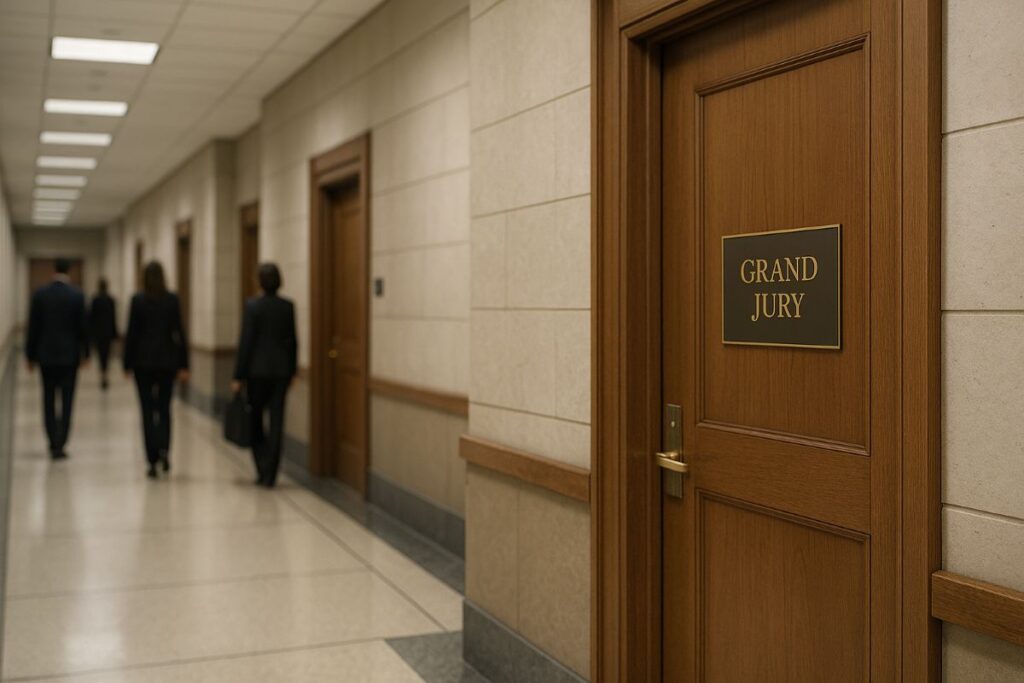
The grand jury has enormous power and almost no outside supervision. Defense lawyers are not present. Judges are not in the room. Prosecutors effectively control what jurors see, what they hear, and how the law is framed. That is why courts normally presume that grand jury proceedings are handled correctly.
In the Comey case, that presumption is being challenged. The judge’s opinion highlighted misstatements about the law, suggestions that jurors could assume the existence of evidence they had never actually seen, and confusion about the exact indictment that the grand jury voted on. Each of these would be troubling in isolation. Taken together, they look a lot like the kind of pattern that fuels claims of Comey case misconduct.
When the order goes so far as to require the Justice Department to hand over grand jury transcripts to the defense — a highly unusual step — it tells you how seriously the court is taking the possibility of Comey case misconduct. Judges do not lightly peel back grand jury secrecy. They do it when they believe something may have gone badly wrong.
A politically loaded case that magnifies every misstep
This case was politically radioactive from the first day. James Comey’s role in the 2016 election, his public clashes with Donald Trump, and his visibility during the early Russia investigations made him a symbol for both sides. When the Justice Department finally indicted him, years later, critics immediately asked whether this was a neutral application of the law or an act of payback.
Against that backdrop, the judge’s concerns about Comey case misconduct land with extra force. It is one thing to prosecute a former official on a clean record and airtight process. It is something else entirely to pursue a controversial indictment with an untested prosecutor, ambiguous testimony, and a grand jury process now flagged by a court as potentially tainted. Every flaw deepens the perception that Comey case misconduct is not an accident but the predictable result of politicized decision-making.
Implications of Comey Case Misconduct for the Justice Department
The department’s credibility is on the line
The Justice Department’s authority ultimately rests on public belief that it plays by the rules even when cases are partisan lightning rods. If courts confirm that Comey case misconduct occurred, that belief takes a direct hit. It becomes harder for the department to insist that it is independent when a judge has effectively documented how independence gave way to pressure, haste, or political motives.
Internally, the case also raises questions about how decisions are made at the top. Who approved the strategy? Who signed off on the grand jury instructions? Who decided that the case had to be brought on the eve of a statute-of-limitations deadline, even with obvious risks in the record? If Comey case misconduct is ultimately affirmed, those questions are not academic. They go straight to the department’s culture and leadership.
The precedent problem: what happens to the next case?
There is a second layer of risk: precedent. Once a federal court writes an opinion describing Comey case misconduct in detail, that opinion becomes a roadmap for other defendants. Defense attorneys in future politically charged cases will cite the Comey ruling to argue that judges should dig into grand jury records, second-guess prosecutorial narratives, and treat official assurances with skepticism.
That precedent does not stay confined to James Comey. It can be applied to cases involving other prominent political figures, former officials, or even private citizens drawn into polarized investigations. In effect, one finding of Comey case misconduct can force courts to police the department much more aggressively going forward, reducing the deference prosecutors have long relied on.
Internal reform versus institutional denial
Most large institutions follow a familiar playbook when confronted with allegations like Comey case misconduct. The first instinct is to deny, minimize, and appeal. The second — usually delayed and reluctant — is to admit that something went wrong and make changes.
The Justice Department now faces that choice. It can treat Comey case misconduct as a “one-off” misunderstanding and fight every request for transparency. Or it can acknowledge that a politically charged environment, a rushed timeline, and weak internal checks created a situation where Comey case misconduct became possible, and then build stronger guardrails to prevent a repeat. Only the second path has any chance of restoring trust. The first just entrenches the narrative that the department cannot police itself.
Public Trust, Politics, and the Comey Case Misconduct Narrative
Why ordinary people care about this fight
Most Americans will never read the actual court filings. They will not parse every sentence of the magistrate’s ruling. What they will absorb is the message that a federal judge has raised red flags about Comey case misconduct — and that the Justice Department is pulling every lever it has to keep the full story from coming out.
In a country already cynical about institutions, that message is toxic. For one political camp, the Comey case proves the department is finally going after a man they believe helped damage their candidate. For the other camp, Comey case misconduct proves that the department has been turned into a weapon to punish Trump critics. Either way, the perception of neutrality is gone.
Once that perception is gone, every future decision is viewed through the same distorted lens. If prosecutors charge a different former official, critics will claim it is just more Comey case misconduct under a different name. If prosecutors decline to charge, opponents will say they learned nothing and are still protecting allies. The case becomes a symbol for a broader collapse in trust.
Media narratives and partisan spin
The media environment guarantees that Comey case misconduct will be spun to the breaking point. One set of outlets will emphasize the judge’s language about “missteps” and “possible misconduct,” using the phrase Comey case misconduct as shorthand for a politically hijacked Justice Department. Another set of outlets will downplay the ruling or frame it as a technical disagreement about grand jury procedure.
The deeper problem is that the facts start to matter less than the narrative. Once Comey case misconduct is locked in as a partisan talking point, there is almost no room left for a nuanced discussion about how prosecutors should handle politically sensitive cases. That is bad for the Justice Department, bad for the courts, and bad for anyone who needs the system to work in a future crisis.
Accountability and Reform After Comey Case Misconduct
What real accountability would look like
If the Justice Department is serious about learning from the Comey case misconduct controversy, accountability cannot be symbolic. It would require concrete steps, such as internal reviews of the case’s supervisory chain, discipline or removal of officials who approved flawed strategies, and public guidance clarifying how politically sensitive investigations will be handled going forward.
That doesn’t mean surrendering to every political demand. It does mean acknowledging, in plain language, that the Comey case misconduct warnings from the court were justified, and that the department understands why they are so damaging. Without that level of candor, promises of reform will sound like spin.
Structural fixes to reduce the risk of future misconduct
There are also structural reforms that could address the vulnerabilities exposed by Comey case misconduct. Independent review panels for politically sensitive indictments, stronger internal ethics review before grand jury presentations, and clearer limits on the role of personal or White House attorneys in federal prosecutions are all on the table.
The question is whether the department is willing to impose constraints on itself. Comey case misconduct did not appear out of nowhere; it emerged from a system that allowed rushed decisions, blurred roles, and inadequate oversight. Fixing that system means giving up some flexibility and accepting external scrutiny, whether the current leadership likes it or not.
Why ignoring Comey case misconduct would be the worst option
There is a third path: do nothing. Treat the controversy as a short-term PR problem, rely on appeals to delay disclosure, and hope that public attention moves on. In the short run, that might spare a few careers. In the long run, it would be catastrophic.
If Comey case misconduct is swept under the rug, it will not disappear. It will resurface every time the department brings another politically charged case. It will be cited in congressional hearings, invoked in campaign speeches, and used to undermine jury confidence in courtrooms across the country. The cost of that erosion will be paid by future prosecutors trying to do their jobs in good faith.
Bottom Line on Comey Case Misconduct
The magistrate’s ruling in Alexandria did more than slow down one prosecution. It forced the Justice Department itself into the spotlight and raised the possibility that Comey case misconduct infected the most basic parts of the process: grand jury instruction, evidence presentation, and the construction of the indictment.
Whether the charges against James Comey survive is now almost secondary. The real question is whether the department can convince the courts — and the country — that Comey case misconduct was an aberration, not a symptom of something deeper. If it cannot, the story of Comey case misconduct will not end with this case. It will linger as a cautionary tale every time the Justice Department asks to be trusted with the next politically explosive investigation.
Further Reading
New York Times, “Justice Dept. May Have Committed Misconduct in Comey Case, Judge Says”:
https://www.nytimes.com/2025/11/17/us/politics/comey-justice-department-misconduct.html
NPR, “Justice Department Won’t Prosecute Comey Over Leaks of Memos” (context on earlier DOJ decisions involving Comey):
https://www.npr.org/2019/08/29/755337487/justice-dept-wont-prosecute-comey-over-leaks-of-memos
New York Times, “James Comey Broke F.B.I. Rules in Handling Trump Memos, Watchdog Finds”:
https://www.nytimes.com/2019/08/29/us/politics/james-comey-inspector-general-report.html
Cornell Law School Legal Information Institute, “Prosecutorial Misconduct”:
https://www.law.cornell.edu/wex/prosecutorial_misconduct
Brennan Center for Justice, “Prosecutorial Misconduct: Law, Agency, and Reform”:
https://www.brennancenter.org/our-work/research-reports/prosecutorial-misconduct
U.S. Department of Justice, Justice Manual (Principles of Federal Prosecution):
https://www.justice.gov/jm/justice-manual
Connect with the Author
Curious about the inspiration behind The Unmaking of America or want to follow the latest news and insights from J.T. Mercer? Dive deeper and stay connected through the links below—then explore Vera2 for sharp, timely reporting.
About the Author
Discover more about J.T. Mercer’s background, writing journey, and the real-world events that inspired The Unmaking of America. Learn what drives the storytelling and how this trilogy came to life.
[Learn more about J.T. Mercer]
NRP Dispatch Blog
Stay informed with the NRP Dispatch blog, where you’ll find author updates, behind-the-scenes commentary, and thought-provoking articles on current events, democracy, and the writing process.
[Read the NRP Dispatch]
Vera2 — News & Analysis
Looking for the latest reporting, explainers, and investigative pieces? Visit Vera2, North River Publications’ news and analysis hub. Vera2 covers politics, civil society, global affairs, courts, technology, and more—curated with context and built for readers who want clarity over noise.
[Explore Vera2]
Whether you’re interested in the creative process, want to engage with fellow readers, or simply want the latest updates, these resources are the best way to stay in touch with the world of The Unmaking of America—and with the broader news ecosystem at Vera2.
Free Chapter
Begin reading The Unmaking of America today and experience a story that asks: What remains when the rules are gone, and who will stand up when it matters most? Join the Fall of America mailing list below to receive the first chapter of The Unmaking of America for free and stay connected for updates, bonus material, and author news.
