
Vera2, Global Affairs
Twitch Added to Australia’s Teen Social Media Ban
Nov
Twitch Added to Australia’s Teen Social Media Ban
Australia has become the first country in the world to roll out a nationwide ban on social media for children under sixteen, and now the dragnet has widened again. Regulators have confirmed that Twitch will join the list of platforms that must lock out users aged fifteen and younger, putting the Amazon-owned live streaming giant in the same legal category as Facebook, Instagram, TikTok, Snapchat, YouTube, X, Reddit, Kick and others.Cybernews+2ABC+2
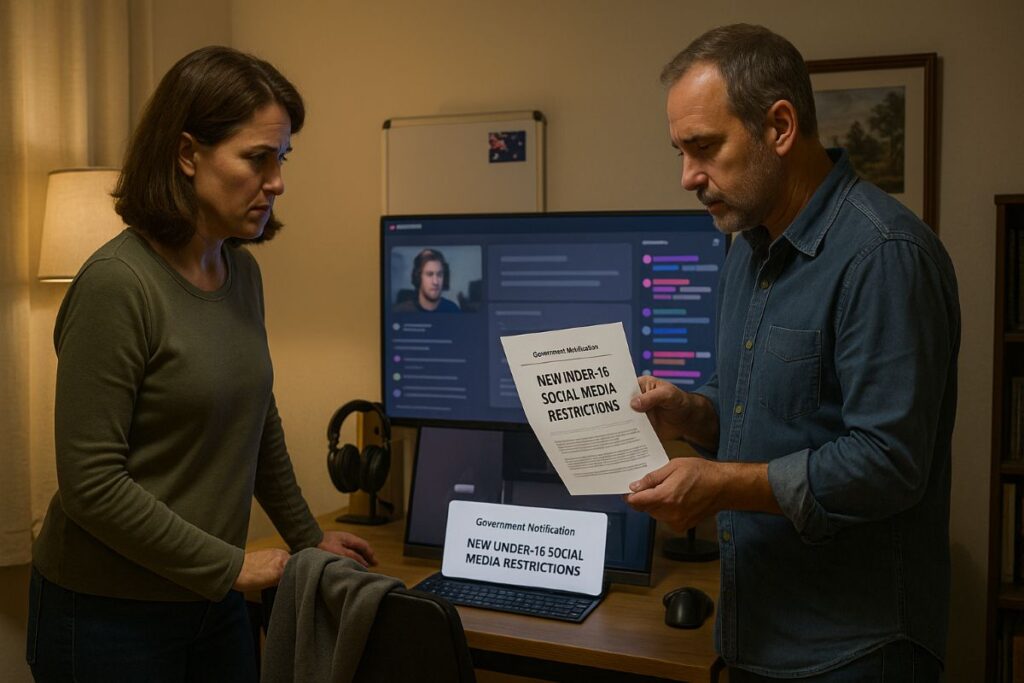
For parents, teenagers, and creators, the decision has sharpened a debate that was already intense. Is this about genuinely protecting young people, or about governments trying to control how teens spend their time online? Either way, the inclusion of Twitch signals that regulators no longer see gaming and live streaming as a harmless side channel. They see it as social media, with all the risks that label implies.
The Legal Framework Behind the Ban
Australia’s teen social media ban is grounded in the Online Safety Amendment (Social Media Minimum Age) Act 2024. The law requires platforms to take “reasonable steps” to prevent children under sixteen from having accounts or accessing services, and threatens fines of up to A$49.5 million for systemic non-compliance. The provisions will be enforced from December 10, 2025.AP News+1
Initially, public discussion focused on familiar apps such as Instagram, TikTok, Snapchat and YouTube. As compliance plans evolved, the eSafety Commissioner began issuing formal notices naming platforms that met the statutory definition of social media. This definition covers services that allow users to create accounts, upload content, interact with others, and build audiences. That definition now explicitly covers Twitch, which Australian authorities say clearly functions as a social media platform, not just a video host.Cybernews+1
Under the law, Twitch must identify and remove users under sixteen in Australia, block new sign-ups from that age group, and demonstrate how it is enforcing the rules. Just as Meta is already notifying young Australians that their Facebook and Instagram accounts will be shut down, Twitch will be expected to wind down under-age accounts and prove that it has systems in place to keep them from returning before their sixteenth birthday.TIME+2Reuters+2
Why Regulators Targeted Twitch
On its surface, Twitch can look like a gaming site, but regulators have zeroed in on how it actually works. The core experience is less about watching static video and more about live, interactive chat rooms wrapped around streamers who build communities, personalities, and in many cases, businesses.
From a regulator’s viewpoint, Twitch checks almost every box that makes social media risky for teenagers:
It is highly interactive. Teen viewers can chat in real time, send direct messages in some contexts, and join community channels that operate like live forums.
It is parasocial. Young users can grow attached to streamers who feel like friends but are in fact strangers managing large audiences.
It is monetized through tips, subscriptions, and digital goods, often pushed during emotionally charged live moments.
Streams are lightly filtered in real time. While Twitch has rules and moderation tools, live content is inherently harder to police than pre-recorded posts.
Australian officials argue that the same harms associated with more traditional platforms can appear here: cyberbullying, exposure to hate speech, sexualized or violent content, and pressure to spend money or share personal information. That is why Twitch now sits alongside the big social apps in the ban, while more static or niche sites such as Pinterest have been left off the list for now.The Independent+2Cybernews+2
Youth Safety Concerns Driving the Decision
Behind the politics is a consistent theme: concern over mental health. Research in multiple countries has linked heavy social media use in teenagers with higher rates of anxiety, depression, disrupted sleep, and feelings of social isolation. The causal pathways are complex, but policymakers increasingly treat time spent in algorithm-driven feeds and high-intensity online communities as a risk factor that should be managed, not ignored.
For Australia, Twitch fits straight into that picture. Endless late-night viewing, highly emotional live chat, and a constant push to stay online to “support” a favorite streamer can magnify the same pressures teens already feel on other platforms. When those spaces include aggressive language, gambling-style loot mechanics in games, or sexualized content just one click away, regulators see a recipe for harm rather than entertainment.
Supporters of the ban also stress grooming and predatory behavior. Any service where adults and minors mix in unsupervised chat rooms raises red flags, and live streaming adds a layer of spontaneity that makes moderation tougher and evidence harder to preserve.
Impact on Australian Teens and Families
For Australian teenagers who use Twitch daily, the change will be abrupt. Once enforcement begins, under-sixteen accounts will be removed, and attempts to sign up with obviously under-age data are supposed to be blocked. If Twitch follows the pattern set by Meta, affected users will likely be given a short window to download their data or save their contacts before losing access.Reuters+1
Parents, meanwhile, will suddenly be on the front line of explaining why access is gone. Some will welcome the law as a forcing function that makes it easier to limit screen time and push kids toward offline activities. Others will find themselves refereeing work-arounds, as teenagers try VPNs, shared devices, or borrowed accounts to keep watching favorite streams.
The ban also raises equity issues. Teens in remote or marginalized communities often rely on digital spaces to connect with peers who share their interests. For them, losing Twitch may mean losing a major social outlet, particularly if local offline opportunities are limited.
How Creators and the Industry Are Responding
Creators who built their audiences partly from Australian teenagers are now facing a hit they can’t easily avoid. Many streamers rely on subscriptions, donations, and advertising revenue tied to viewer numbers. When every viewer under sixteen in Australia is forced off the platform, those numbers will drop, even if the raw headcount is small compared with the global audience.
Amazon and other tech giants have been cautious in their public responses. Meta, for example, has argued that its existing teen safety tools are already strong and that blanket bans are a blunt instrument.TIME+1 It is reasonable to expect similar messaging around the extension of the ban to Twitch: expressions of compliance with the law paired with warnings that the approach may be overreaching, ineffective, or unfair to responsible teens and parents.
Civil liberties groups and some child-development experts are also uneasy. They contend that bans risk driving young people into harder-to-monitor corners of the internet, from anonymous forums to unregulated streaming sites, while doing little to change underlying behavior. They argue for better digital literacy, strong parental tools, and targeted enforcement against abuse instead of sweeping age-based cut-offs.
The Enforcement Problem No One Has Solved
On paper, the law is clear. In practice, enforcement is a mess. Platforms are under pressure to keep minors off their main services, yet they are also being warned not to roll out intrusive age verification for everyone, such as universal ID checks or mandatory facial recognition.AP News+1
That leaves companies like Twitch in a narrow and politically risky corridor. They are expected to:
Use existing data and behavioral signals to detect likely under-sixteen users.
Deploy age-estimation tools such as AI face-analysis only where necessary and proportionate.
Avoid creating new privacy and surveillance problems in the process.
Such systems will inevitably make mistakes. Some adults will be wrongly flagged as minors and locked out until they prove their age. Some under-age users will slip through the net by lying about their date of birth, using older siblings’ devices, or shifting to platforms that fall just outside the definition of social media.
Critics worry that this gap between legal ambition and technical reality will undermine public confidence, either by inviting more surveillance or by showing that determined teens can bypass the rules anyway.
What Happens Next for Twitch and Youth Social Media Policy
The inclusion of Twitch in Australia’s teen social media ban is not just a local story. Lawmakers across Europe and North America are closely watching how the experiment unfolds. If the rollout appears successful, with clear evidence of reduced harms and manageable enforcement costs, other governments may follow with similar restrictions.
If it turns chaotic, with endless false positives, legal challenges, and angry families, it may instead become a cautionary tale about how not to regulate youth access to platforms like Twitch.
Either way, the decision cements a crucial shift. Gaming and live streaming platforms used to sit just outside the regulatory spotlight. Now they are squarely in it. The message from Canberra to Twitch and its peers is simple: if your service looks and behaves like social media, regulators will treat it that way.
Bottom Line
The move to add Twitch to Australia’s teen social media ban shows how quickly the regulatory net is tightening around any platform that hosts youth communities, not just the usual social apps. Supporters see a necessary safeguard against mental-health risks, predatory behavior, and late-night doom-scrolling in live chat. Critics see a heavy-handed experiment that could fracture online life for teenagers and create new privacy problems without solving old ones.
What is clear is that Twitch is now a test case. How Australia, the platform, and its users navigate this ban will help decide whether the world leans into age-based social media restrictions, or pulls back in search of a more nuanced way to keep young people safe online.
Further Reading
Reuters has a concise overview of how Australia’s internet watchdog decided to include Amazon-owned Twitch in the teen social media ban while declining to add Pinterest, and what this means for enforcement and fines:
https://www.reuters.com/technology/australia-expands-teen-social-media-ban-twitch-rules-out-pinterest-2025-11-21/ Cybernews
ABC News explains how the eSafety Commissioner is constructing the official list of platforms affected by the ban and why Twitch now joins services such as TikTok, YouTube, Snapchat, X, Reddit and others:
https://www.abc.net.au/news/2025-11-21/twitch-included-in-under-16s-social-media-ban/106036398 ABC
GuruFocus and TradingView provide a market-focused take on the announcement that Amazon’s Twitch will have to restrict youth access under the new Australian law, highlighting investor reactions and business implications:
https://www.tradingview.com/news/gurufocus%3A1fa31db79094b%3A0-amazon-unit-twitch-added-to-australia-s-teen-social-media-ban/ TradingView
Time Magazine offers a broader look at how platforms such as Meta are responding to Australia’s world-first under-sixteen social media ban, including messaging to teens and early age-verification strategies:
https://time.com/7335378/meta-australia-social-media-under-16-ban/ TIME
The Online Safety Amendment (Social Media Minimum Age) Act 2024 page on Wikipedia summarizes the legal framework, implementation timeline, and the evolving list of platforms now subject to age restrictions, including Twitch:
https://en.wikipedia.org/wiki/Online_Safety_Amendment
Connect with the Author
Curious about the inspiration behind The Unmaking of America or want to follow the latest news and insights from J.T. Mercer? Dive deeper and stay connected through the links below—then explore Vera2 for sharp, timely reporting.
About the Author
Discover more about J.T. Mercer’s background, writing journey, and the real-world events that inspired The Unmaking of America. Learn what drives the storytelling and how this trilogy came to life.
[Learn more about J.T. Mercer]
NRP Dispatch Blog
Stay informed with the NRP Dispatch blog, where you’ll find author updates, behind-the-scenes commentary, and thought-provoking articles on current events, democracy, and the writing process.
[Read the NRP Dispatch]
Vera2 — News & Analysis
Looking for the latest reporting, explainers, and investigative pieces? Visit Vera2, North River Publications’ news and analysis hub. Vera2 covers politics, civil society, global affairs, courts, technology, and more—curated with context and built for readers who want clarity over noise.
[Explore Vera2]
Whether you’re interested in the creative process, want to engage with fellow readers, or simply want the latest updates, these resources are the best way to stay in touch with the world of The Unmaking of America—and with the broader news ecosystem at Vera2.
Free Chapter
Begin reading The Unmaking of America today and experience a story that asks: What remains when the rules are gone, and who will stand up when it matters most? Join the Fall of America mailing list below to receive the first chapter of The Unmaking of America for free and stay connected for updates, bonus material, and author news.
