
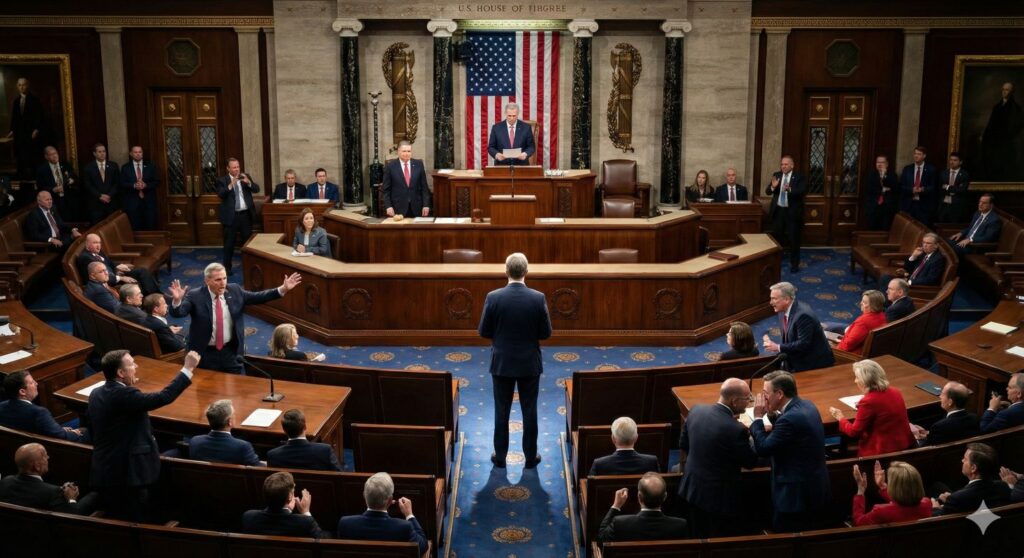
Censures in the House: A Symptom of Political Toxicity
Once a rare and dramatic punishment, censures in the U.S. House of Representatives have become a recurring feature of congressional life. Instead of signaling extraordinary misconduct, censures are increasingly treated as one more weapon in an already toxic partisan arms race. The spike in censures tells you as much about the state of American politics as it does about the individual lawmakers being targeted.
In theory, censures are supposed to protect the integrity of the institution. In practice, the recent wave of censures has turned them into high-profile theatrics that deepen mistrust, feed fundraising machines, and push Congress further away from serious governance.
What A Censure Is Supposed To Be
The House has broad constitutional authority to discipline its own members, using tools that range from informal warnings to the extreme step of expulsion. Historically, expulsion is the nuclear option, followed by censure and then reprimand as lesser forms of formal punishment.
A censure is a formal public condemnation. The member is usually required to stand in the well of the House while the Speaker or another presiding officer reads the censure resolution aloud. The censure becomes part of the permanent record and a visible stain on the lawmaker’s career. Importantly, censures do not remove a representative from office or strip them of voting rights; the sanction is reputational rather than legal.
For most of U.S. history, censures were rare precisely because they were meant to signal extreme cases: corruption, serious abuses of power, or flagrantly racist or violent behavior. The House’s own historical record shows that, over nearly two centuries, members have been censured or otherwise formally disciplined only a few dozen times.
That is why the current run of censures feels different. When the same punishment that once marked the worst conduct in the House is being used multiple times in a single Congress, the message gets muddied.
From Historical Rarity To Routine Political Weapon
Recent coverage has highlighted how long-term norms around censures have broken down. By late 2025, the House had censured nearly thirty members in its entire history, but a disproportionate number of those censures have come in the past few years. ABC and local outlets covering the March 2025 censure of Rep. Al Green explicitly noted that censuring House members was historically rare, but that the last few years have seen both parties using this punishment as a political tool.
You can see the pattern in specific high-profile cases. In June 2023, the Republican-led House voted along party lines to censure Democratic Rep. Adam Schiff over his role in Trump–Russia investigations, turning a long-running partisan feud into a formal punishment and campaign talking point.
Later that year, the House narrowly voted to censure Democratic Rep. Rashida Tlaib for her rhetoric about Israel and the Gaza war, after a series of privileged resolutions were filed to force votes on her conduct. Privileged status allows sponsors to bypass leadership and committees and bring censure resolutions directly to the floor, making it easier to weaponize them in the middle of broader political fights.
By March 2025, the House had added Rep. Al Green to the list of censured members after he disrupted a presidential address, with ten Democrats joining Republicans in the 224–198 vote. That case prompted multiple outlets to point out that he was already the fifth member censured in this decade, a sharp contrast with the long stretches of time in which no one was censured at all.
Most recently, a flurry of censure activity in November 2025 saw lawmakers trying to punish multiple colleagues in a single week, with only one of those censures actually succeeding. The rest failed but still consumed time, media attention, and floor energy. This is what normalization looks like: censures moving from extraordinary events to a recurring tactic in day-to-day partisan conflict.
How Privileged Resolutions Turbocharge Censures
Procedurally, one of the drivers of this trend is the use of privileged resolutions. A censure resolution designated as privileged lets its sponsor force consideration by the full House even over leadership’s objections.
That means individual members now have more leverage to trigger votes that put colleagues on the record, generate viral clips, and feed campaign narratives. In a hyper-polarized environment, this is an obvious temptation. The result is more censures and more attempted censures, often framed around hot-button cultural or foreign-policy disputes rather than old-school bribery or blatant corruption.
Censures in this context become less a moral verdict and more a partisan branding exercise.
How Censures Reflect A Toxic Governing Culture
Supporters of aggressive use of censures argue that they are necessary to enforce basic standards of conduct in an era of performative extremism. There is a kernel of truth in that; the chamber has seen everything from violent imagery to open defiance of decorum rules over the last few years.
But the way censures are used now reveals a deeper problem. Instead of a consistent, principle-driven standard, censures are mostly applied when one side has the votes and a political incentive to embarrass the other. That encourages a tit-for-tat cycle: if you censure our member, we will file resolutions to censure yours. The result is more censures, more outrage, and fewer incentives to lower the temperature.
As censures pile up, several things happen.
First, the signal gets diluted. When censures were truly rare, they carried real stigma. When they become more common, they start to look like just another partisan talking point. Analysts covering the Al Green case noted that the punishment has lost some of its gravity as it gets pulled into everyday partisan battles.
Second, censures become fundraising fuel. Lawmakers on both sides quickly turn censures into email blasts and social-media content about being “silenced” or “persecuted,” using the punishment to rally supporters and raise money. That feedback loop rewards the behavior that led to the censure in the first place.
Third, censures crowd out actual legislating. Floor time spent on censures is time not spent writing budgets, oversight reports, or substantive policy. In a period when Congress already struggles to pass basic appropriations on time, constant fights over censures only reinforce the impression that the institution is more interested in spectacle than solutions.
Public Trust, Media Coverage, And The Spectacle Of Censures
For the public, frequent censures send a pretty simple message: Congress is broken.
Local and national media understandably gravitate toward censure fights because they are dramatic, easy to explain, and loaded with conflict. Articles and TV segments focus on shouting matches, emotional floor speeches, and scenes like members singing protest songs while a censure is read aloud. The structural context gets less attention.
That coverage feeds cynicism. Voters see their representatives hurling accusations and formal punishments at each other rather than hashing out difficult compromises on issues like immigration, health care, or the budget. Over time, censures become one more piece of evidence for people who already believe Congress is more interested in partisan theater than governing.
At the same time, censures are a blunt tool for accountability. A formal public rebuke might matter to a member who fears losing committee roles or centrist voters. But in very safe districts, censures can actually enhance a member’s profile. Adam Schiff, for example, immediately used his 2023 censure in fundraising and primary positioning for a Senate race, leaning into the idea that he was punished for standing up to Trump.
When censures help some politicians rather than hurt them, the deterrent effect of censures shrinks even further.
The Emerging Push To Rein In Censures
The good news is that members from both parties know the current pattern is unsustainable. After the latest run of censure fights, a bipartisan group of lawmakers introduced a proposal to raise the threshold required to pass censures in the House, moving from a simple majority to a supermajority.
The idea is straightforward: if censures are meant to mark truly exceptional misconduct, they should require more than a bare, partisan majority. A higher bar would not eliminate censures, but it would force sponsors to build broader consensus and discourage the most transparently performative attempts.
There is also talk of clarifying the standards for when censures are appropriate at all, reinforcing the idea that serious ethical, criminal, or incitement-related behavior belongs in a different category than offensive rhetoric or political protest. The House’s own history makes that distinction clear: earlier censures often involved corruption, violence, or explicit racist acts that crossed bright lines.
Reform will not magically detoxify Congress. But tightening the rules around censures would at least stop some of the bleeding and remind members that this tool is supposed to mean something more than “our side disapproves of you.”
What Censures Tell Us About Where Congress Is Headed
The recent wave of censures in the House is not an isolated quirk. It is a symptom of a deeper structural problem: a politics that rewards outrage over persuasion, humiliation over compromise, and short-term media hits over long-term institutional health.
When censures are used sparingly, they can reinforce norms and signal that some behavior is beyond the pale. When censures are habitually deployed against political enemies, they simply become another data point in a vicious-cycle narrative: the other side is evil, our side is under attack, and nothing matters except winning the next round.
If that pattern continues, censures will keep multiplying, but real accountability will shrink. The House will keep burning floor time on symbolic punishments while basic governance tasks fall further behind. And public trust, already battered, will erode even more.
Breaking that cycle will require more than procedural tweaks. It will require members to decide that preserving the House as a functioning institution matters more than scoring the next viral clip. Raising the bar for censures is only a first step, but it is an honest acknowledgment that the current approach is feeding the very toxicity it claims to punish.
Bottom Line
The surge in censures in the House is not a sign of higher ethical standards. It is evidence of a political system that increasingly turns every dispute into a public shaming ritual. Unless Congress reforms how it uses censures – and recovers some sense of proportion and restraint – the punishment will keep losing meaning while the toxicity it reflects keeps getting worse.
Further Reading
“List of Individuals Expelled, Censured, or Reprimanded in the House,” Office of the Historian, U.S. House of Representatives – an official overview of congressional discipline and how censure fits into the broader system of sanctions:
https://history.house.gov/Institution/Discipline/Expulsion-Censure-Reprimand/
“House Votes to Censure Rep. Adam Schiff,” Roll Call 283 / Congress.gov – official record of the June 21, 2023 vote and resolution text against Rep. Adam Schiff:
https://clerk.house.gov/Votes/2023283
https://www.congress.gov/bill/118th-congress/house-resolution/521/text
“H.Res.845 – Censuring Representative Rashida Tlaib,” Congress.gov and related coverage explaining how privileged censure resolutions are used on the House floor:
https://www.congress.gov/bill/118th-congress/house-resolution/845
https://www.pbs.org/newshour/politics/house-considers-censures-against-rashida-tlaib-and-marjorie-taylor-greene-over-inflammatory-rhetoric
“House Votes to Censure Rep. Al Green for Disrupting Trump Speech,” Texas Tribune and Reuters – detailed reporting on the March 6, 2025 censure of Al Green and what it reveals about decorum fights and partisanship:
https://www.texastribune.org/2025/03/06/house-censure-rep-al-green/
https://www.reuters.com/world/us/us-house-vote-possible-censure-democrat-green-who-protested-trumps-speech-2025-03-06/
“Censuring House Members Has Been Historically Rare, But…” ABC News explainer – summary of what a censure is, why it carries no direct legal penalty, and how it has become a political tool in recent years:
https://abc13.com/post/house-hold-censure-vote-democratic-rep-al-green-he-disrupted-trumps-address/15980689/
“What to Know About This Week’s Flurry of Censure Fights in the House,” Time / Yahoo News – overview of the latest wave of censures and attempts to censure, and how both parties are now calling for reform:
https://time.com/7335931/house-censure-votes-congress-plaskett-mills-garcia/
“House Resolution Seeks to Raise Threshold for Censuring Lawmakers,” UPI / Yahoo – coverage of the bipartisan Beyer–Bacon resolution to make censures harder to pass and limit their partisan abuse:
https://www.upi.com/Top_News/US/2025/11/22/house-resolution-raise-threshold-censuring-lawmakers/7591732303950/
Connect with the Author
Curious about the inspiration behind The Unmaking of America or want to follow the latest news and insights from J.T. Mercer? Dive deeper and stay connected through the links below—then explore Vera2 for sharp, timely reporting.
About the Author
Discover more about J.T. Mercer’s background, writing journey, and the real-world events that inspired The Unmaking of America. Learn what drives the storytelling and how this trilogy came to life.
[Learn more about J.T. Mercer]
NRP Dispatch Blog
Stay informed with the NRP Dispatch blog, where you’ll find author updates, behind-the-scenes commentary, and thought-provoking articles on current events, democracy, and the writing process.
[Read the NRP Dispatch]
Vera2 — News & Analysis
Looking for the latest reporting, explainers, and investigative pieces? Visit Vera2, North River Publications’ news and analysis hub. Vera2 covers politics, civil society, global affairs, courts, technology, and more—curated with context and built for readers who want clarity over noise.
[Explore Vera2]
Whether you’re interested in the creative process, want to engage with fellow readers, or simply want the latest updates, these resources are the best way to stay in touch with the world of The Unmaking of America—and with the broader news ecosystem at Vera2.
Free Chapter
Begin reading The Unmaking of America today and experience a story that asks: What remains when the rules are gone, and who will stand up when it matters most? Join the Fall of America mailing list below to receive the first chapter of The Unmaking of America for free and stay connected for updates, bonus material, and author news.
