
Vera2, Investigations & Corruption
Admiral Bradley | Trump and Hegseth Comments on Boat Strike
Dec
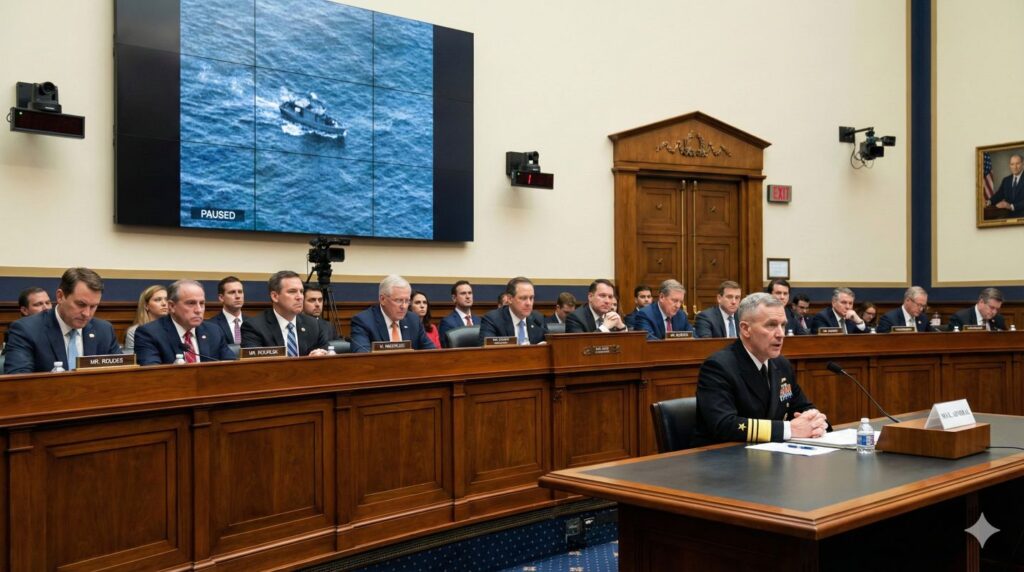
Admiral Bradley Faces Scrutiny Over Boat Strike Incident
Admiral Bradley is now at the center of one of the most serious military controversies of the Trump era. What began as a September 2 strike on a suspected drug-smuggling boat in the Caribbean has spiraled into bipartisan outrage, accusations of possible war crimes, and plans for aggressive congressional hearings. Reporting has revealed that after an initial strike disabled the vessel, a second missile was launched, killing survivors who had been seen in the water. The White House insists the attack was lawful; lawmakers and legal experts are not so sure. ABC News+2AP News+2
The story of Admiral Bradley and the September 2 mission is no longer just about one boat or one target. It is about how the United States uses force at sea, who is held accountable when things go wrong, and whether the rules of war still have teeth when national security rhetoric ramps up.
Background of the Incident — Admiral Bradley
According to Pentagon and media accounts, the September 2 operation was part of a wider campaign of US strikes on alleged drug-trafficking vessels operating near Venezuela and in the broader Caribbean. The mission’s stated goal was to disrupt financing for violent cartels by treating certain boats as “military objectives” within a broader conflict framework. Wikipedia+1
At the time of the strike, Admiral Bradley was serving in a senior special operations role, with authority delegated by Defense Secretary Pete Hegseth to conduct “kinetic strikes” on suspected narco-trafficking boats. Public statements and briefings now confirm that Hegseth approved the overall campaign, while Admiral Bradley directed the specific engagement that has triggered the current firestorm. Wikipedia+2Stars and Stripes+2
Initial reports indicated that the first strike disabled the vessel and left at least two survivors visible in the water on drone feeds. The core allegation is that, after those survivors were identified, Admiral Bradley approved a follow-up strike aimed at fully destroying the boat and eliminating any remaining people in or around it. That second strike is what lawmakers and legal experts now say may cross the line from aggressive enforcement into unlawful killing. The Washington Post+2PBS+2
The Second Strike and the Law of Armed Conflict
The key legal question is simple and brutal: once a boat is disabled and its crew are in the water, are they still lawful targets? Under the law of armed conflict and long-standing naval warfare rules, shipwrecked persons who are hors de combat are entitled to protection, not further attack, unless they are clearly continuing to pose an immediate threat. Law-of-war experts interviewed by PBS and others have stated that intentionally targeting such survivors can amount to a war crime. PBS+1
Administration officials have tried to reframe the second strike as an attempt to ensure the complete destruction of a dangerous vessel, not the deliberate killing of the survivors. According to their narrative, the legal justification flows from a classified opinion that treats certain drug boats as part of a broader armed conflict against narco-terrorist groups. But that logic is exactly what critics are challenging: the more you stretch the definition of “combatant” to include a boat crew floating in the water, the weaker your legal position becomes. The Guardian+1
For members of Congress, Admiral Bradley has become the human face of this legal tangle. Even if responsibility ultimately traces back to Hegseth and the White House, the order to launch the second missile appears to have passed through his hands.
Bipartisan Anger and Demands for Oversight
The backlash has not split along clean partisan lines. Lawmakers in both parties have publicly questioned whether the second strike could constitute a war crime, and whether the administration misled Congress about the scope and rules of the Caribbean campaign. Time, PBS, and other outlets report that members are pushing for hearings “as soon as next week” to grill witnesses, demand video footage, and review the legal memos that supposedly justify the operation. TIME+2PBS+2
Some Republicans frame Admiral Bradley as a dedicated officer caught in a political crossfire, arguing that he carried out a lawful mission under authorities given by civilian leaders. Others in the same party are more blunt, suggesting that if the legal analysis turns out to be flimsy, they are prepared to challenge not only the operation but the entire policy of treating drug boats as de facto enemy combatants.
Democrats argue that Admiral Bradley is the blunt instrument of a reckless policy that has treated the Caribbean as a live-fire testing ground for expansive interpretations of self-defense and counter-narcotics authority. For them, the concern is not just this one mission, but the broader pattern: at least 21 similar strikes since September, resulting in more than 80 deaths, under rules Congress never explicitly approved. Axios+2Wikipedia+2
White House Defense and Scapegoat Fears
At the White House podium, officials insist Admiral Bradley acted “within his authority and the law,” emphasizing that he was delegated power by Hegseth and that the September 2 mission fit within a classified framework for targeting drug-financed threats. ABC News+2Stars and Stripes+2 They have repeatedly stressed that the operation focused on a vessel and its role in financing violence, not on particular individuals.
Parallel reporting, however, paints a more cynical picture. The Guardian, Axios, and others describe a pattern in which the administration publicly embraces Admiral Bradley when convenient, then subtly shifts blame onto him when legal questions intensify. Sources inside the Pentagon have accused political leaders of “selling out” the admiral to shield Hegseth from direct accountability for the decision to permit or even encourage a “no survivors” mindset. The Guardian+2Axios+2
Legal experts note that even if Admiral Bradley sincerely believed he was executing a lawful order, that does not automatically immunize him from scrutiny. Under international law, commanders must refuse manifestly unlawful orders, including explicit instructions to kill shipwrecked survivors. Whether the September 2 directives crossed that line is exactly what Congress and outside investigators now want to know. PBS+1
What Admiral Bradley Will Face in Congress
When Admiral Bradley appears in closed and open sessions of the House and Senate Armed Services Committees, the questioning is likely to be relentless. Members will press for details on timelines, communications, and real-time intelligence. They will want to know exactly when survivors were identified, who proposed the second strike, and what language was used in any verbal or written orders.
Reports suggest that lawmakers will also focus on the broader campaign: how many times similar tactics have been used, what rules of engagement were in place, and whether Admiral Bradley or his staff ever raised concerns up the chain of command. Yahoo+2Al Jazeera+2 The hearings may pull in other witnesses, including legal advisors and senior Pentagon officials, to test whether the story being told by the White House matches the factual record.
For Admiral Bradley personally, the stakes are enormous. His reputation as a decorated special operations leader is now entangled with an incident many around the world view as a potential war crime. A carefully handled testimony might preserve his career and push more blame onto civilian leaders. A defensive or evasive performance could have the opposite effect.
Broader Implications for Maritime Warfare and Oversight
The controversy reaches well beyond one admiral and one mission. If Congress accepts a theory that allows commanders to attack shipwrecked survivors on drug boats, it risks normalizing a far more permissive standard for lethal force at sea. Other states will watch closely; what the US claims it can lawfully do in the Caribbean today may be cited by rivals in their own contested waters tomorrow. Wikipedia+2Wikipedia+2
At the same time, the case is a test of whether civilian oversight still has real teeth when it comes to secretive operations. For years, lawmakers have complained that they receive after-the-fact briefings that are vague, heavily classified, and structured to preempt hard questions. The boat strike hearings will show whether Congress is willing to push past that, demand raw footage and full legal opinions, and force the Pentagon to tighten rules of engagement where necessary.
There is also a moral dimension that no amount of legal wordplay can erase. Even if a clever memo concludes that the September 2 mission technically fit within a particular reading of the law, the image of missiles hitting people clinging to wreckage will not fade quickly. The public understands the difference between a firefight and the killing of survivors. The gap between what the law allows and what people recognize as legitimate is where long-term damage to US credibility happens.
Bottom Line — Why Admiral Bradley’s Case Matters
What happens to Admiral Bradley will echo far beyond his career. If the outcome is a quiet internal review, a few carefully worded letters, and a gentle reaffirmation that “mistakes were made but the mission was lawful,” then the message to future commanders will be simple: aggressive action will be protected, even when it flirts with clear prohibitions on targeting survivors.
If, on the other hand, investigations lead to real accountability—whether for Admiral Bradley, for Hegseth, or for those who crafted the legal cover—then the September 2 strike could mark a turning point. It could force a rethinking of how the US defines armed conflict with non-state actors, how it trains commanders to interpret rules of engagement, and how seriously it treats its own commitments to the laws of war.
In the end, the question is not just whether Admiral Bradley acted “within his authority.” The deeper question is whether that authority was itself twisted into something that the law, and basic human decency, should never allow.
Further Reading
White House says admiral ordered follow-on strike on alleged drug boat on Sept. 2
https://www.stripes.com/theaters/us/2025-12-01/white-house-says-admiral-ordered-second-strike-19947940.html
Hegseth, citing “fog of war,” says he learned of survivors hours after strike
https://www.washingtonpost.com/national-security/2025/12/02/hegseth-boat-strike-fog-of-war/
Trump administration is “selling out” admiral to shield Hegseth over boat strikes
https://www.theguardian.com/us-news/2025/dec/02/us-admiral-to-brief-lawmakers-as-bipartisan-scrutiny-grows-over-boat-strike
White House defends Hegseth and second strike on boat near Venezuela
https://www.axios.com/2025/12/01/pete-hegseth-venezuelan-boat-survivors-strike
What the law says about killing survivors of a boat strike, according to experts
https://www.pbs.org/newshour/politics/what-the-law-says-about-killing-survivors-of-a-boat-strike-according-to-experts
Boat Strike Revelations Draw Bipartisan Outrage, Spurring Push for Hearings
https://time.com/7337928/boat-strike-congress-hegseth-hearings-video-release/
Frank M. Bradley — Biographical and controversy overview
https://en.wikipedia.org/wiki/Frank_M._Bradley
2025 United States military strikes on alleged drug traffickers
https://en.wikipedia.org/wiki/2025_United_States_military_strikes_on_alleged_drug_traffickers
Connect with the Author
Curious about the inspiration behind The Unmaking of America or want to follow the latest news and insights from J.T. Mercer? Dive deeper and stay connected through the links below—then explore Vera2 for sharp, timely reporting.
About the Author
Discover more about J.T. Mercer’s background, writing journey, and the real-world events that inspired The Unmaking of America. Learn what drives the storytelling and how this trilogy came to life.
[Learn more about J.T. Mercer]
NRP Dispatch Blog
Stay informed with the NRP Dispatch blog, where you’ll find author updates, behind-the-scenes commentary, and thought-provoking articles on current events, democracy, and the writing process.
[Read the NRP Dispatch]
Vera2 — News & Analysis
Looking for the latest reporting, explainers, and investigative pieces? Visit Vera2, North River Publications’ news and analysis hub. Vera2 covers politics, civil society, global affairs, courts, technology, and more—curated with context and built for readers who want clarity over noise.
[Explore Vera2]
Whether you’re interested in the creative process, want to engage with fellow readers, or simply want the latest updates, these resources are the best way to stay in touch with the world of The Unmaking of America—and with the broader news ecosystem at Vera2.
Free Chapter
Begin reading The Unmaking of America today and experience a story that asks: What remains when the rules are gone, and who will stand up when it matters most? Join the Fall of America mailing list below to receive the first chapter of The Unmaking of America for free and stay connected for updates, bonus material, and author news.
