
Vera2, Courts and Justice
Judge Halts Justice Dept. Effort to Seek New Comey
Dec
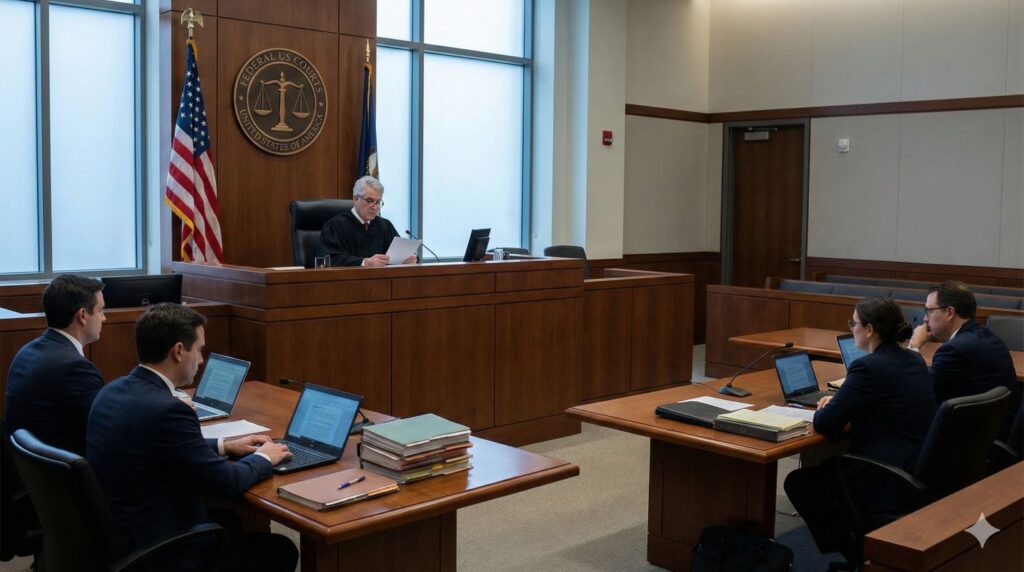
Judge Blocks Justice Department’s Attempt for New Comey Indictment
A federal judge’s ruling in Washington has slammed the brakes on the Justice Department’s latest push for a new Comey indictment. Instead of quietly regrouping after its first case collapsed, the department is now under a court order that stops prosecutors from accessing a trove of digital evidence they previously used to build charges against the former FBI director.
At the center of this fight is Daniel Richman, a law professor, longtime friend and former attorney to James Comey. During earlier leak investigations, Richman handed over data from his computer, cloud accounts and email to federal investigators. Years later, that same material is being used as the backbone of a renewed attempt at a Comey indictment – and Richman is arguing that the government has gone too far.
By granting a temporary restraining order, Judge Colleen Kollar-Kotelly has not permanently killed the Comey indictment effort. But she has frozen the government in place at a critical moment, demanding answers about how agents seized, stored and searched Richman’s data before prosecutors can even think about taking a new Comey indictment to a grand jury.
Background on the Indictment Efforts — Comey Indictment
To understand why this ruling matters, you have to look at the long and messy road leading up to the current case against Comey.
James Comey has been a political lightning rod since at least 2016, when his handling of the Hillary Clinton email investigation angered both parties. In 2017, President Donald Trump fired him while the FBI was probing Russian interference in the 2016 election. After his removal, Comey wrote detailed memos about his private conversations with Trump, including discussions of ongoing investigations. The Justice Department’s inspector general later concluded that Comey violated FBI policy in how he retained and handled some of those memos, but the department declined to file charges, citing the difficulty of winning such a case at trial.
That could have been the end of it. Instead, under a Justice Department increasingly focused on Trump’s critics, prosecutors eventually brought a Comey indictment accusing him of lying to Congress and obstructing its work. The core allegation: that he misled lawmakers about authorizing media contacts on politically explosive investigations and used Richman as a go-between with reporters.
That first case against Comey did not survive contact with the courts. In November 2025, a judge threw out the charges after finding that lead prosecutor Lindsey Halligan had been unlawfully appointed and therefore lacked authority to bring the case in the first place. It was an embarrassing blow for the department, but officials quickly signaled they were considering a second Comey indictment built on the same underlying evidence – much of it drawn from Richman’s seized data.
Richman responded with his own lawsuit, arguing that the government had crossed constitutional lines in how it handled his information. That counterattack is what produced the latest ruling.
What the Judge Actually Blocked
Richman’s complaint is simple and sharp. He says that while he initially cooperated with investigators years ago, the government had no right to keep a full image of his computer and copies of his messages for fresh fishing expeditions long after the original leak probe ended. In his view, prosecutors are trying to stretch old consent into an open-ended license to rummage through his digital life in order to resurrect a Comey indictment.
Judge Kollar-Kotelly agreed that the claim was serious enough to demand immediate action. Her temporary restraining order bars the Justice Department from accessing, searching or using the disputed data while she decides whether it was lawfully retained. The department must identify every location where that data sits, secure it and report back to the court. Only after that will the judge consider whether prosecutors can ever use it again.
For the government’s strategy in the case against Comey, this is a huge problem. Reporting indicates that the seized emails and files from Richman were central to the original charges, forming much of the narrative that Comey deliberately used his friend as a channel to leak sensitive details and then misled Congress about it. Without clear access to those materials, any renewed Comey indictment becomes harder to construct and far more vulnerable to challenge.
The ruling is narrow on paper – it is temporary and focused on specific data – but broad in practical effect. Before the Justice Department can proceed with a second Comey indictment, it now has to survive a separate fight over its own conduct.
Why Richman’s Data Matters So Much
Prosecutors have cast Richman as a key supporting character in the Comey indictment storyline. Earlier filings and media reports describe him as an informal adviser who communicated with reporters about FBI matters on Comey’s behalf, particularly during the storm over the Clinton email and Russia investigations.
The seized data was supposed to prove that. Emails between the two men, notes about press contacts, drafts of talking points and other digital crumbs formed the backbone of the original case. When the first Comey indictment was thrown out on technical grounds, prosecutors made clear they still believed the evidence showed a pattern of deliberate leaking and false statements – and they wanted another shot.
Now, however, that evidence is sitting behind a judicial firewall. If the court ultimately rules that investigators violated the Fourth Amendment or trampled attorney–client privilege in pursuing Richman’s files, the damage to any future Comey indictment could be fatal.
Legal Stakes: Evidence, Privilege, and Overreach
The judge’s decision shines a harsh light on how far the government pushed in order to keep the Comey indictment alive.
According to recent reporting, the FBI used a mix of voluntary cooperation and search warrants in 2019 and 2020 to obtain Richman’s data as part of a leaks investigation that, at the time, did not result in charges against either Richman or Comey. Richman now says whatever legal basis existed back then did not give the government carte blanche to hold onto his digital life forever and re-purpose it for a later Comey indictment years down the line.
There is also the issue of privilege. Richman has at times acted as Comey’s attorney. If privileged communications were swept up, shown to investigators or exposed to a grand jury without proper safeguards, that could taint the entire process. One federal judge has already slammed the department for “profound investigative missteps” in the same case, warning that agents may have crossed bright legal lines. The restraining order suggests Judge Kollar-Kotelly sees enough smoke to check for fire, and she is not willing to let a new Comey indictment move forward on evidence that might have been gathered or retained unlawfully.
Beyond the specifics of Richman’s devices, the case highlights how hard it is to turn controversial handling of sensitive information into a clean criminal prosecution. Federal laws on mishandling classified material – including provisions under the Espionage Act and statutes like 18 U.S.C. § 1924 and 18 U.S.C. § 793 – require proof of willful misuse, not just sloppiness or poor judgment.
In Comey’s earlier chapter, the inspector general found policy violations in the way he dealt with his Trump memos, but the Justice Department still declined to bring charges, saying the evidence was not strong enough to win at trial. That history explains why the current Comey indictment focuses more on alleged lies to Congress and obstruction than on straight-up classified-documents counts. It also explains why any hint of overreach in the new case is so toxic for the department’s credibility.
Political Fallout: Law, Power, and an Ex-FBI Director
However much prosecutors insist that the Comey indictment is about neutral law enforcement, the political backdrop is impossible to ignore.
Trump has openly talked for years about jailing rivals and has singled out Comey as someone who should be prosecuted. During the same period, other prominent critics, including New York Attorney General Letitia James, have faced aggressive criminal cases from the Trump-era Justice Department after clashing with him in court.
That pattern makes the Comey indictment look, to many observers, less like a one-off and more like part of a campaign against high-profile opponents. Supporters of the prosecution say that no one is above the law, that lying to Congress is serious business, and that prior decisions not to charge over the memo episode do not immunize Comey from other misconduct. Critics answer that the Comey indictment exists mainly because the former president wants payback and has found willing legal foot soldiers.
The judge’s new ruling strengthens the critics’ narrative. When a federal court blocks the Justice Department from touching evidence that underpins a Comey indictment, it raises obvious questions about whether investigators bent the rules to satisfy political demands. For those who already see the case as politicized, this order looks like confirmation. For those who believe a Comey indictment is overdue, it is a maddening technical roadblock.
Reactions from elected officials follow predictable lines. Many Republicans have framed the decision as the judiciary tying prosecutors’ hands and protecting an elite insider. Democrats and civil-liberties advocates have praised the ruling as a necessary check on a Justice Department that has stumbled repeatedly while targeting Trump critics, from the original failed Comey indictment to the botched appointment of the lead prosecutor.
What Happens Next for the Case
In the near term, Justice Department lawyers have to focus less on drafting a new Comey indictment and more on defending their own behavior.
They can appeal the restraining order and argue that they acted within the law when they imaged Richman’s devices and retained the data. They can try to design a narrower case that does not depend on the disputed material, relying instead on other witnesses and records. Or they can quietly decide that the risks, the optics and the legal headaches around another Comey indictment are not worth it.
Each path has consequences. An appeal keeps the controversy alive and risks a more sweeping appellate loss that could permanently bar use of the Richman data and set precedent limiting similar investigations. A stripped-down Comey indictment would likely be weaker and easier for the defense to dismantle in front of a jury. Walking away would spare DOJ further embarrassment but would look, to Trump allies, like a retreat under pressure.
The calendar is another constraint. Comey’s lawyers argue that the statute of limitations on some alleged conduct is close to expiring, if it has not already lapsed, which makes every delay more dangerous for prosecutors who still want a viable Comey indictment. The longer the department spends litigating search protocols and privilege, the less time it has to persuade a grand jury that the case is worth reviving.
Why This Ruling Matters Beyond the Comey Indictment
Whatever happens to this particular Comey indictment effort, the judge’s order points to bigger questions about how the United States handles politically sensitive prosecutions.
If the promise is that former officials will be treated like everyone else, then that has to include strict respect for constitutional limits on searches, retention of personal data and attorney–client communications. If the Justice Department wants to show that a Comey indictment is about equal justice rather than political score-settling, it has to win not just on the facts but on process.
Seen in that light, the restraining order is a stress test. Either prosecutors can demonstrate that they followed clear rules in collecting and using Richman’s information, or they cannot. If they pass that test, the court may eventually lift the restrictions and the Comey indictment could re-emerge in some form. If they fail, this may be the last serious attempt to put Comey on trial.
In the meantime, the case is already shaping how future leak and classified-information probes will be viewed. Any prosecution that leans heavily on seized digital data against a controversial figure will be measured against what courts ultimately say in this fight. That alone makes the ruling much bigger than one man’s fate.
For now, the bottom line is straightforward. The Justice Department hoped to reset, reload and quickly seek a new Comey indictment after its first case imploded in November. Instead, it is back in front of a skeptical federal judge, forced to explain how it treats evidence, critics and the basic boundaries of the rule of law.
Further Reading
For readers who want to see the underlying reporting and legal documents behind this latest ruling and the broader controversy over James Comey, the following sources provide useful context:
Politico’s coverage of Judge Colleen Kollar-Kotelly’s temporary restraining order explains how the Justice Department is now barred from accessing emails and computer data seized from Daniel Richman while the court reviews whether the data was lawfully retained:
https://www.politico.com/news/2025/12/06/judge-blocks-prosecutors-access-to-james-comeys-lawyers-emails-and-data-00679805
The Washington Post details the same order and describes how it complicates prosecutors’ efforts to revive charges against the former FBI director, including concerns about attorney–client privilege and the statute of limitations:
https://www.washingtonpost.com/national-security/2025/12/07/james-comey-daniel-richman-emails/
Reuters provides a concise overview of the ruling and notes that the seized materials had been used previously in a dismissed case, while the Justice Department weighs whether to pursue a new prosecution:
https://www.reuters.com/world/us/us-judge-temporarily-bars-prosecutors-use-evidence-key-figure-comey-case-2025-12-07/
The Justice Department’s inspector general report from 2019 reviews Comey’s handling of his Trump memos and explains why the department declined to prosecute at that time, even after finding policy violations:
https://oig.justice.gov/reports/report-investigation-former-fbi-director-james-comeys-disclosure-sensitive-investigative
For a broader primer on how US law treats mishandling and disclosure of classified information, the Congressional Research Service and legal analyses from defense attorneys outline the relevant statutes and the high bar for criminal charges:
https://crsreports.congress.gov/product/pdf/RS/RS21900
https://www.burnhamgorokhov.com/penalties-of-mishandling-classified-documents-in-the-united-states/
Connect with the Author
Curious about the inspiration behind The Unmaking of America or want to follow the latest news and insights from J.T. Mercer? Dive deeper and stay connected through the links below—then explore Vera2 for sharp, timely reporting.
About the Author
Discover more about J.T. Mercer’s background, writing journey, and the real-world events that inspired The Unmaking of America. Learn what drives the storytelling and how this trilogy came to life.
[Learn more about J.T. Mercer]
NRP Dispatch Blog
Stay informed with the NRP Dispatch blog, where you’ll find author updates, behind-the-scenes commentary, and thought-provoking articles on current events, democracy, and the writing process.
[Read the NRP Dispatch]
Vera2 — News & Analysis
Looking for the latest reporting, explainers, and investigative pieces? Visit Vera2, North River Publications’ news and analysis hub. Vera2 covers politics, civil society, global affairs, courts, technology, and more—curated with context and built for readers who want clarity over noise.
[Explore Vera2]
Whether you’re interested in the creative process, want to engage with fellow readers, or simply want the latest updates, these resources are the best way to stay in touch with the world of The Unmaking of America—and with the broader news ecosystem at Vera2.
Free Chapter
Begin reading The Unmaking of America today and experience a story that asks: What remains when the rules are gone, and who will stand up when it matters most? Join the Fall of America mailing list below to receive the first chapter of The Unmaking of America for free and stay connected for updates, bonus material, and author news.
