
Vera2, Global Affairs
US sanctions escalate after U.S. seizes tanker off Venezuela’s coast
Dec
US Sanctions Target Ships Following Venezuelan Oil Seizure
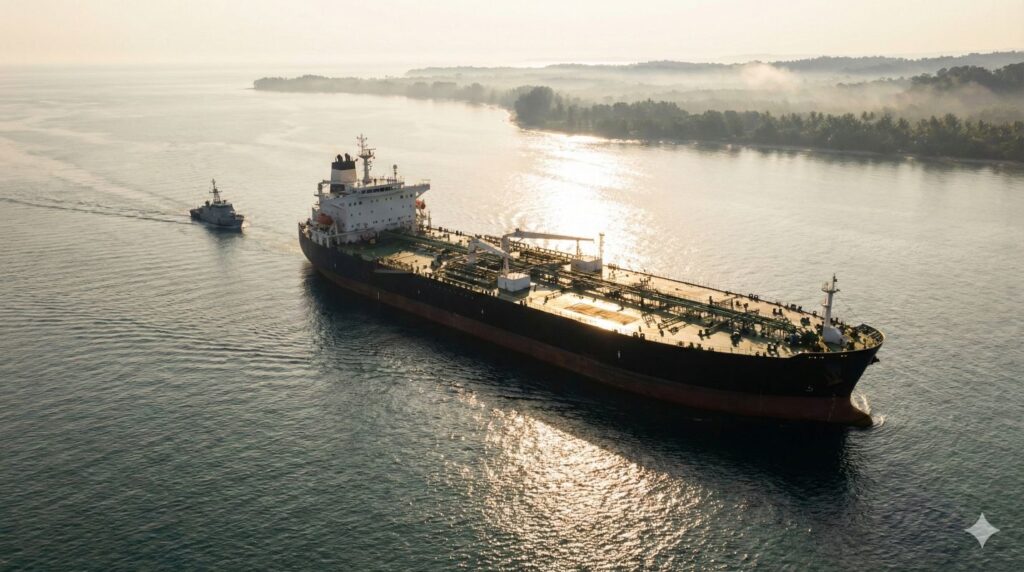
US sanctions against Venezuela escalated sharply in mid-December 2025, pairing a dramatic maritime seizure with a fresh round of designations aimed at the shipping networks that keep Venezuelan crude moving. On December 10, 2025, U.S. authorities seized an oil tanker off Venezuela’s coast identified as the Skipper, an operation that U.S. officials described as enforcement of existing sanctions and a court-issued warrant. ABC News+1
One day later, on December 11, 2025, US sanctions expanded again when the U.S. Department of the Treasury announced new measures targeting several individuals and maritime entities linked to Venezuelan oil exports. Treasury said the action includes sanctions on six shipping companies and the identification of six crude oil tankers connected to those firms. U.S. Department of the Treasury+2OFAC+2
Venezuela’s government condemned the seizure and the follow-on US sanctions, describing the tanker operation as theft and “piracy,” and signaling it would pursue complaints through international bodies. Reuters+1
What happened: the seizure that triggered new US sanctions
The seizure of the Skipper was publicly acknowledged by President Donald Trump on December 10, 2025, and reported by multiple outlets as a U.S. operation carried out with federal law enforcement and Coast Guard involvement. ABC News reported that the U.S. Coast Guard conducted the seizure and that Attorney General Pam Bondi posted video showing the operation tied to a seizure warrant for a tanker accused of transporting sanctioned oil connected to Venezuela and Iran. ABC News+1
Reporting from the Guardian described the Skipper as a very large crude carrier (VLCC) and said the seizure was executed under a U.S. judicial warrant and is proceeding through a legal forfeiture process. The same reporting framed the action as part of a broader push against sanctions evasion through maritime “dark fleet” behavior, where vessels use opaque ownership structures and deceptive tracking practices to reduce detection. The Guardian+1
This is the context in which US sanctions took a hard turn toward the logistics layer of Venezuela’s oil trade: not just who sells the oil, but how it gets moved.
Why US sanctions are focusing on ships, not just institutions
For years, U.S. policy has tried to restrict revenue streams to Venezuela’s government by targeting state-linked entities and oil-sector activity. Treasury’s December 11 announcement explicitly links the latest US sanctions to the view that Venezuela’s oil sector continues to fund the Maduro government, and it frames the maritime network as a key enabler of that revenue. U.S. Department of the Treasury+1
The practical reason is simple: oil is only money when it can be exported. Tankers require financing, insurance, classification services, flag-state registration, and port access. When US sanctions target shipowners and vessels, every one of those counterparties has to evaluate whether continuing business is worth the risk. Even if a buyer wants the crude, the trade can become difficult to execute if insurers or banks step back.
This shipping-centered approach also amplifies deterrence. A refinery can change suppliers; a shipowner can lose a vessel’s commercial viability overnight if the vessel becomes a sanctions risk. That’s why US sanctions on tankers and their operators can ripple quickly through the market, even before a single barrel is unloaded.
What the December 11 US sanctions cover
Shipping companies and the six tankers
On December 11, 2025, Treasury announced US sanctions against six shipping companies operating in Venezuela’s oil sector and identified six associated crude oil tankers. The OFAC “Recent Actions” notice for December 11 reflects SDN list updates connected to Venezuela-related authorities and lists newly added entities. U.S. Department of the Treasury+2OFAC+2
Reuters reported that four of the sanctioned tankers are Panama-flagged, while two are flagged by the Cook Islands and Hong Kong. Reuters also named examples of vessels covered by the action, including the H. Constance (built 2002) and the Lattafa (built 2003). Reuters+1
Treasury’s statement says the targeted vessels have engaged in deceptive and unsafe shipping practices and that the intent of US sanctions is to constrain financial flows that support the Venezuelan government by disrupting the transport network. U.S. Department of the Treasury+1
Individuals designated alongside the maritime network
The same Treasury announcement included US sanctions on several individuals described as Maduro-regime insiders, including three nephews of Venezuela’s first lady, Cilia Flores, and a Maduro-affiliated businessman. Reuters identified the relatives as Franqui Flores, Efrain Campo Flores, and Carlos Erik Malpica Flores, and said the designations were part of a broader escalation in U.S. pressure on Caracas. Reuters+1
These individual designations matter because they widen the compliance net around the oil trade. When US sanctions target people tied to financing or influence networks, it can complicate contracting, payments, beneficial-ownership checks, and corporate relationships linked to maritime operations.
How the tanker seizure and US sanctions work in practice
A key point that often gets lost is that US sanctions and a seizure are not the same thing. US sanctions designate parties and prohibit certain dealings under U.S. jurisdiction, which can heavily constrain global counterparties that touch the U.S. financial system. A seizure, by contrast, is a physical enforcement action tied to a legal warrant and a court process.
In the Skipper case, multiple reports describe the operation as being conducted pursuant to a seizure warrant. ABC News reported the operation in those terms, including official statements characterizing the vessel as involved in transporting sanctioned oil connected to Venezuela and Iran. ABC News+1
The Guardian’s reporting similarly described a judicial warrant and a legal forfeiture process, which is significant because forfeiture proceedings can take time and can depend on evidence regarding ownership, cargo provenance, sanctions status, and jurisdiction. The Guardian
That legal distinction also shapes what comes next. US sanctions can be widened quickly through additional designations. Seizures typically require operational capacity, legal preparation, and a downstream plan for where a vessel goes and how a cargo is handled.
Venezuela’s response and the “piracy” dispute
Venezuela’s government reacted angrily to the seizure and the expanding US sanctions. Reuters reported that Venezuela accused the United States of “blatant theft” and said it would defend sovereignty and denounce the seizure before international bodies. Reuters
Venezuelan officials have also used language such as “piracy” to frame the seizure as illegal under international norms. The Guardian described Maduro condemning the action in those terms, while also noting that the U.S. side has emphasized legal process and sanctions enforcement. The Guardian+1
This rhetorical clash matters because it signals where Venezuela is likely to take the dispute: not only through retaliation narratives aimed at domestic audiences, but through international forums and allied messaging designed to portray US sanctions enforcement as overreach.
Market and regional effects of the new US sanctions
Shipping behavior shifts quickly under US sanctions risk
One immediate effect of US sanctions pressure is hesitation across shipping and trading desks. When vessels are designated or perceived as at risk, shipowners and insurers become cautious, and cargo schedules can be delayed or rerouted. That can widen discounts on Venezuelan crude as sellers try to compensate buyers for higher logistical and legal risk.
This is why US sanctions that target ships can change behavior even without a formal blockade. A “pause” in liftings, a rise in freight costs, or a shortage of willing tonnage can reduce export volumes in practice.
Oil prices and supply fears
Reuters reported that the combination of seizure news and expanded US sanctions contributed to upward pressure on oil prices, reflecting the market’s sensitivity to any potential disruption in flows, even from a sanctioned producer. Reuters+1
Venezuela holds very large reserves, but export capability depends on infrastructure, financing, and access to ships. When US sanctions tighten around transport, the market starts to price in friction: longer voyages, fewer willing carriers, and more uncertainty around deliveries.
Escalation risks at sea
The operational optics of the Skipper seizure also raise escalation concerns. The Guardian described the seizure as a high-profile operation involving U.S. forces boarding the vessel, and that visibility can be interpreted as deterrence by Washington and provocation by Caracas. The Guardian+1
While there is no public evidence of immediate naval confrontation beyond the seizure itself, the political temperature matters. When both sides frame actions in maximalist terms—US sanctions as a crackdown and Venezuela as “piracy”—miscalculation risk increases.
What to watch next as US sanctions expand
The most important near-term question is whether US sanctions remain primarily designation-driven or shift into repeated interdictions. Reporting has indicated that U.S. authorities are considering further enforcement against additional vessels tied to sanctioned Venezuelan oil movements, which would increase pressure on the maritime network and amplify deterrence for shipowners. Investing.com+1
A second question is whether Venezuela’s government can find enough willing carriers and counterparties to keep exports steady without offering larger discounts. If more shipowners decide the risk is not worth it, the export pipeline can narrow even without changes in production.
Finally, watch for diplomatic spillovers. Allies of Caracas may amplify the sovereignty argument, while Washington may point to sanctions evasion and broader regional security framing. If the dispute shifts into international organizations, the fight may become as much about narrative legitimacy as barrels of oil.
Bottom Line
US sanctions and the Skipper seizure represent a coordinated escalation: first a physical interdiction under a warrant, then broader financial and commercial constraints aimed at the shipping layer of Venezuelan crude exports. If more vessels and operators are pulled into the US sanctions net, the practical impact is likely to be felt through higher costs, fewer willing carriers, and more volatile export logistics—alongside a higher-risk political standoff between Washington and Caracas. U.S. Department of the Treasury+2Reuters+2
Further Reading
BBC report on the seizure and Venezuela’s response: https://www.bbc.com/news/articles/cz688jp90epo
U.S. Department of the Treasury press release (Dec. 11, 2025): https://home.treasury.gov/news/press-releases/sb0332
OFAC “Recent Actions” notice (Dec. 11, 2025): https://ofac.treasury.gov/recent-actions/20251211
Reuters report on the designations and vessel details (Dec. 11, 2025): https://www.reuters.com/business/energy/us-sanctions-maduros-nephews-six-ships-carrying-venezuela-oil-says-axios-2025-12-11/
Reuters report on preparations for additional seizures (Dec. 12, 2025): https://www.reuters.com/business/energy/us-preparing-seize-more-tankers-off-venezuelas-coast-after-first-ship-taken-2025-12-11/
The Guardian explainer on Skipper and the forfeiture process (Dec. 11, 2025): https://www.theguardian.com/us-news/2025/dec/11/venezuela-oil-tanker-seized-us
Connect with the Author
Curious about the inspiration behind The Unmaking of America or want to follow the latest news and insights from J.T. Mercer? Dive deeper and stay connected through the links below—then explore Vera2 for sharp, timely reporting.
About the Author
Discover more about J.T. Mercer’s background, writing journey, and the real-world events that inspired The Unmaking of America. Learn what drives the storytelling and how this trilogy came to life.
[Learn more about J.T. Mercer]
NRP Dispatch Blog
Stay informed with the NRP Dispatch blog, where you’ll find author updates, behind-the-scenes commentary, and thought-provoking articles on current events, democracy, and the writing process.
[Read the NRP Dispatch]
Vera2 — News & Analysis
Looking for the latest reporting, explainers, and investigative pieces? Visit Vera2, North River Publications’ news and analysis hub. Vera2 covers politics, civil society, global affairs, courts, technology, and more—curated with context and built for readers who want clarity over noise.
[Explore Vera2]
Whether you’re interested in the creative process, want to engage with fellow readers, or simply want the latest updates, these resources are the best way to stay in touch with the world of The Unmaking of America—and with the broader news ecosystem at Vera2.
Free Chapter
Begin reading The Unmaking of America today and experience a story that asks: What remains when the rules are gone, and who will stand up when it matters most? Join the Fall of America mailing list below to receive the first chapter of The Unmaking of America for free and stay connected for updates, bonus material, and author news.
