
Vera2, Investigations & Corruption
Judge Rules Epstein Grand Jury Records Can Be Released Under New Transparency Law
Dec
Judge Rules Epstein Grand Jury Records Can Be Released
A federal judge in New York has ruled that Epstein grand jury records from Jeffrey Epstein’s 2019 sex trafficking case can be made public, marking a rare break with the traditional secrecy that surrounds federal grand jury proceedings. The decision follows the passage of the Epstein Files Transparency Act, a new federal law that directs the Justice Department to release Epstein-related materials, including Epstein grand jury records, by December 19, 2025. PBS+1
The ruling by U.S. District Judge Richard M. Berman reverses his earlier stance. He had previously kept the Epstein grand jury records sealed to protect victims’ privacy and to comply with long-standing rules under Federal Rule of Criminal Procedure 6(e), which normally keeps grand jury material confidential. The new law, however, explicitly instructs courts and the Justice Department to unseal specified Epstein grand jury records and related documents, subject to redactions for victims and sensitive information. AP News+2AP News+2
This decision does not stand alone. A federal judge in Florida has already ordered the release of older Epstein grand jury records from a mid-2000s federal investigation, and another judge in New York has granted a similar motion to unseal grand jury materials from the Ghislaine Maxwell case. Together, these rulings create an unprecedented level of transparency around the Epstein grand jury records and the broader federal response to Epstein and his network. ABC News+2ABC News+2
Background: Why the Epstein Grand Jury Records Matter
Epstein’s 2019 federal case
In July 2019, federal prosecutors in the Southern District of New York charged Jeffrey Epstein with sex trafficking and sex trafficking conspiracy, alleging that he abused girls as young as 14 and paid some victims to recruit other minors in both Florida and New York. A grand jury returned an indictment after reviewing evidence presented by the government. The Washington Post+1
Those proceedings produced the Epstein grand jury records now at the center of the fight over transparency. The materials include roughly 70 pages of transcript in which an FBI agent summarized evidence gathered by investigators, along with supporting materials such as a PowerPoint presentation and call logs. Epstein died in jail in August 2019; his death was ruled a suicide, and the criminal case ended without a trial. The Times+2AP News+2
Traditional secrecy around grand jury material
Under Rule 6(e), federal grand jury proceedings are typically sealed to protect witnesses, avoid prejudicing potential jurors, and safeguard ongoing investigations. Courts rarely release grand jury material, and when they do, it is usually in narrow circumstances where there is a strong, specific showing of need. For years, that standard kept Epstein grand jury records from public view, even as public interest in the case grew. PBS+1
Victims and journalists argued that the secrecy surrounding Epstein grand jury records hindered public understanding of how law enforcement handled the case and whether any influential individuals received special treatment. But without a change in the law, judges had limited room to depart from the default rule of secrecy. PBS+1
What the Judge’s Ruling Actually Does
Scope of the records being released
Judge Berman’s new order authorizes the Justice Department to release the Epstein grand jury records from the 2019 case to the public, consistent with the requirements of the Epstein Files Transparency Act. That includes the approximately 70 pages of grand jury transcript, the related exhibits presented to the grand jury, and other non-classified, non-sealed materials covered by the statute. AP News+2The Washington Post+2
The judge has cautioned that the Epstein grand jury records are “hardly revelatory” and mostly contain hearsay testimony summarizing conduct already described in public indictments and court filings. The ruling makes clear that people expecting a sweeping “client list” or completely new narrative about the case are likely to be disappointed. The Times+2Newsweek+2
Redactions and victim protections
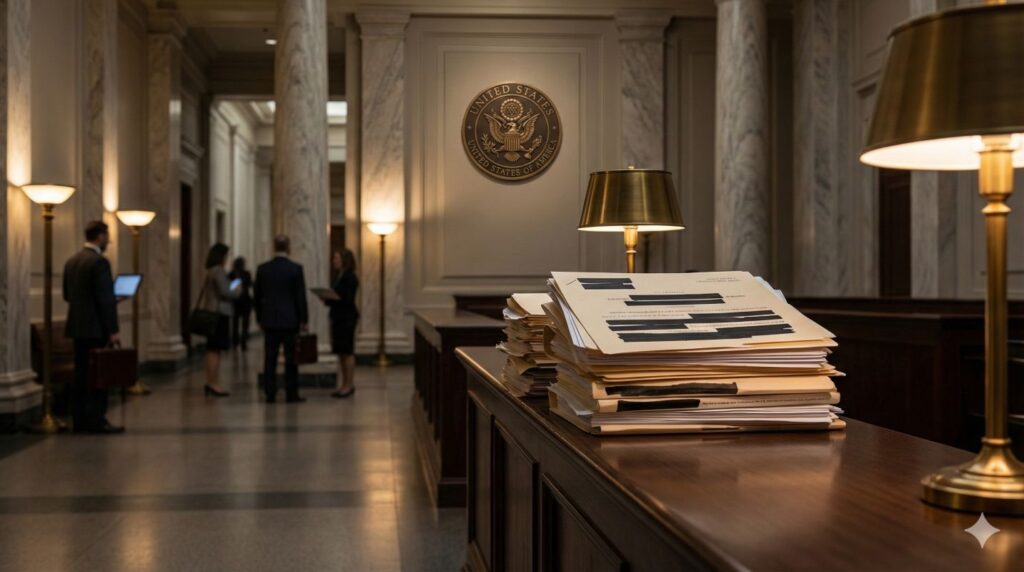
Crucially, the judge ordered that the Justice Department must redact names and identifying details of victims and others where necessary to prevent harm. The Epstein grand jury records will therefore appear with blacked-out lines wherever disclosure could expose survivors, reveal private information, or create a significant security risk. All three judges involved in unsealing Epstein-related files have emphasized that victim privacy remains a priority. AP News+2ABC News+2
This compromise approach allows the public to see how prosecutors used Epstein grand jury records to build their case while still honoring the protections promised to people who came forward. It also aligns with the language of the new law, which explicitly requires protection of victim identities even as it mandates the release of Epstein grand jury records. New York Post+1
How the Epstein Files Transparency Act Changed the Rules
A targeted exception to Rule 6(e)
The Epstein Files Transparency Act, passed by Congress and signed by President Donald Trump, created a narrow but powerful exception to grand jury secrecy rules. The law requires the Justice Department to release unclassified records, documents, communications, and investigative materials related to Jeffrey Epstein and Ghislaine Maxwell, including Epstein grand jury records, by December 19, 2025. https://www.wkyt.com+2CBS News+2
The statute directs judges to lift secrecy orders that would otherwise keep Epstein grand jury records sealed. It also bars the government from withholding information solely to prevent embarrassment to public officials or third parties, while still allowing redactions for privacy, safety, or national security. This legislative move is what allowed Judge Berman to revisit and reverse his earlier decision to keep the Epstein grand jury records sealed. ABC News+2New York Post+2
Multiple courts applying the same law
The same law drove the Florida judge’s decision to release mid-2000s Epstein grand jury transcripts and guided Judge Paul Engelmayer’s order to unseal grand jury materials in the Maxwell case. In each instance, the government went back to court after the law passed and argued that continued secrecy for Epstein grand jury records would conflict with the new transparency mandate. ABC News+2ABC News+2
This coordinated set of rulings means that Epstein grand jury records from several distinct investigations will be processed, redacted, and released in roughly the same time frame, giving the public a more complete picture of how federal authorities pursued the case across jurisdictions and years. The Washington Post+1
Impact on Victims and the Public
Potential benefits for survivors
For many survivors, the release of Epstein grand jury records is a step toward accountability. Victims’ lawyers have publicly supported the law and the rulings, describing transparency about Epstein grand jury records and related files as essential to evaluating how seriously authorities took the allegations and whether they missed opportunities to intervene earlier. The Washington Post+2PBS+2
The release of Epstein grand jury records also helps validate years of reporting and litigation. Instead of relying solely on leaks, redacted civil filings, or second-hand summaries, victims and journalists will be able to examine official transcripts and exhibits that show how federal agents and prosecutors documented Epstein’s conduct. Politico+1
Risks of re-traumatization and sensationalism
There are, however, real risks. Even with redactions, renewed media coverage of Epstein grand jury records can trigger painful memories and push victims back into the spotlight. Advocacy groups have warned that the release must not become a vehicle for voyeuristic coverage or social-media harassment, especially given the intense, sometimes conspiratorial public interest in the case. AP News+2Newsweek+2
Judges have tried to address this by emphasizing that Epstein grand jury records are being released to strengthen public understanding of the justice system, not to fuel speculation about uncharged individuals. The emphasis on redactions and careful handling reflects an attempt to balance the public’s right to know with the ethical duty to avoid further harm to survivors. AP News+1
What the Epstein Grand Jury Records Are Likely to Show
Limited new names, more procedural detail
Based on judges’ descriptions, the Epstein grand jury records are unlikely to provide a dramatic “new list” of previously unknown associates. Instead, they will mostly show how investigators presented the already established pattern of abuse to grand jurors, including victim statements summarized by the FBI and documentary evidence like flight logs, call records, and financial records. The Times+2Newsweek+2
News coverage and legal experts have consistently said that the Epstein Files Transparency Act and these rulings are aimed at government accountability, not the release of a secret “client list.” In that sense, the main value of the Epstein grand jury records may lie in clarifying investigative timelines, charging decisions, and any gaps between what was known internally and what was publicly disclosed. Newsweek+2Spectrum Local News+2
Relationship to other Epstein-related files
The Epstein grand jury records are just one part of the larger set of materials covered by the law. The Justice Department must also release non-grand-jury investigative files where possible, as well as materials from the Maxwell prosecution and the earlier Florida investigation. When viewed together, those records should provide the most comprehensive official documentation yet of the federal response to Epstein and his associates. PBS+2CBS News+2
Researchers and reporters will likely cross-reference the Epstein grand jury records with civil lawsuits, prior plea agreements, and internal Justice Department memos that may also come to light. Over time, this combined record will allow a more precise assessment of how the system functioned—and where it failed—in handling one of the most notorious abuse cases in recent history. Politico+1
Why the Epstein Grand Jury Records Matter Beyond This Case
The decision to release Epstein grand jury records under the Epstein Files Transparency Act is already prompting wider questions about whether similar transparency measures should apply to other cases involving systemic abuse or public corruption. For decades, grand jury secrecy has been treated as almost absolute; this episode shows that Congress can create targeted exceptions when national interest and public trust are at stake. CBS News+2Politico+2
Legal scholars note that the law is tightly focused: it does not broadly rewrite Rule 6(e), and it names Epstein and Maxwell specifically. But once Epstein grand jury records are public, they may become a model for future transparency efforts. Advocates may push for comparable laws when there are credible claims that secrecy is protecting institutional failures rather than legitimate investigative needs. CBS News+1
For now, the release of Epstein grand jury records marks a singular moment. It signals that, in this case, Congress and the courts agree that the benefit of letting the public see how the justice system handled Epstein outweighs the usual preference for secrecy. How the public, the media, and policymakers use that access will determine whether this experiment in transparency leads to broader reform—or remains a one-off response to an extraordinary scandal. The Washington Post+2Reuters+2
Bottom Line
The judge’s ruling, driven by the Epstein Files Transparency Act, ensures that Epstein grand jury records from the 2019 federal case, along with related material from Florida and the Maxwell prosecution, will soon be available to the public in redacted form. The Epstein grand jury records are unlikely to upend everything we know about Epstein, but they will give a clearer view of how federal authorities documented his crimes, presented evidence, and exercised their discretion. That clarity is precisely what many victims and members of the public have demanded for years—and why the fight over Epstein grand jury records has become a test of how transparent the U.S. justice system is willing to be. AP News+2PBS+2
Further Reading
Associated Press – “Justice Department can unseal records from Epstein’s 2019 sex trafficking case, judge says”
https://apnews.com/article/epstein-sex-trafficking-case-records-justice-department-016bbded12959c90d1679e15aa273b60 AP News
Reuters – “US judge lets more Epstein grand jury materials be made public”
https://www.reuters.com/world/us-judge-allows-additional-grand-jury-materials-epstein-case-be-made-public-2025-12-10/ Reuters
PBS NewsHour – “Judge says Justice Department can unseal records from Epstein’s 2019 sex trafficking case”
https://www.pbs.org/newshour/politics/judge-says-justice-department-can-unseal-records-from-epsteins-2019-sex-trafficking-case PBS
ABC News – “Florida judge grants DOJ motion to unseal Epstein grand jury transcripts”
https://abcnews.go.com/US/florida-judge-grants-doj-motion-unseal-epstein-grand/story?id=128153706 ABC News
ABC News – “3rd judge grants DOJ motion to unseal grand jury materials from government’s Epstein files”
https://abcnews.go.com/US/3rd-judge-grants-doj-motion-unseal-grand-jury/story?id=128280059 ABC News
CBS News – “Federal judge orders unsealing of more Epstein files in New York”
https://www.cbsnews.com/news/epstein-files-new-york-judge-unsealing-justice-department/ CBS News
Newsweek – “Will Jeffrey Epstein List Be Released? What to Know About Judge’s Decision”
https://www.newsweek.com/will-jeffrey-epstein-list-be-released-what-know-about-judges-decision-11190576
Connect with the Author
Curious about the inspiration behind The Unmaking of America or want to follow the latest news and insights from J.T. Mercer? Dive deeper and stay connected through the links below—then explore Vera2 for sharp, timely reporting.
About the Author
Discover more about J.T. Mercer’s background, writing journey, and the real-world events that inspired The Unmaking of America. Learn what drives the storytelling and how this trilogy came to life.
[Learn more about J.T. Mercer]
NRP Dispatch Blog
Stay informed with the NRP Dispatch blog, where you’ll find author updates, behind-the-scenes commentary, and thought-provoking articles on current events, democracy, and the writing process.
[Read the NRP Dispatch]
Vera2 — News & Analysis
Looking for the latest reporting, explainers, and investigative pieces? Visit Vera2, North River Publications’ news and analysis hub. Vera2 covers politics, civil society, global affairs, courts, technology, and more—curated with context and built for readers who want clarity over noise.
[Explore Vera2]
Whether you’re interested in the creative process, want to engage with fellow readers, or simply want the latest updates, these resources are the best way to stay in touch with the world of The Unmaking of America—and with the broader news ecosystem at Vera2.
Free Chapter
Begin reading The Unmaking of America today and experience a story that asks: What remains when the rules are gone, and who will stand up when it matters most? Join the Fall of America mailing list below to receive the first chapter of The Unmaking of America for free and stay connected for updates, bonus material, and author news.
