
Vera2, Investigations & Corruption
Jeffrey Epstein Files Latest
Dec
Epstein Files Release Raises Questions About Trump Ties
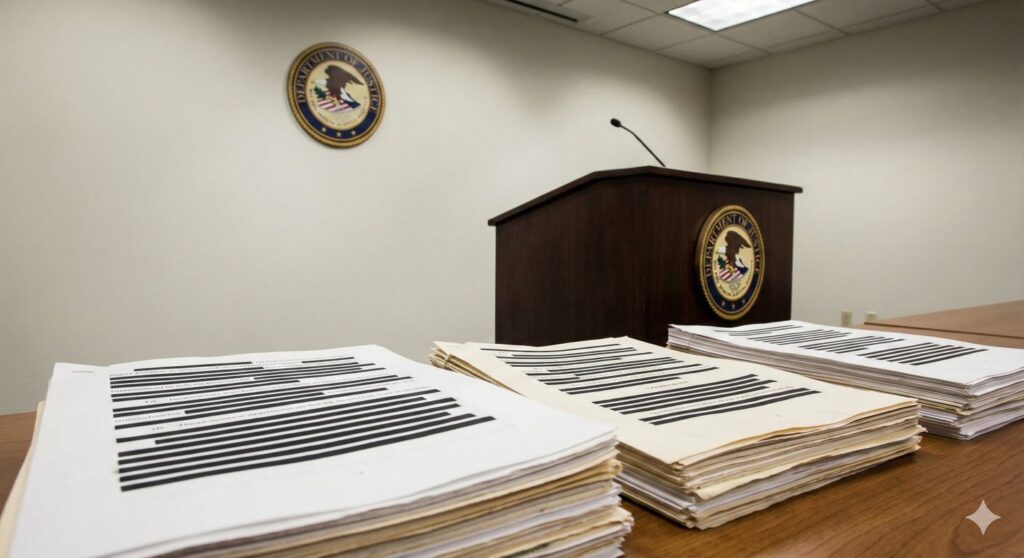
The Epstein files release by the U.S. Department of Justice in mid-December 2025 triggered immediate backlash from lawmakers, victim advocates, and transparency groups, not only because of what appeared in the documents, but because of what many observers believe did not. The DOJ posted thousands of files online in response to the Epstein Files Transparency Act, but critics said the initial publication was heavily redacted, incomplete, and difficult to reconcile with prior public reporting about the scale of Epstein-related records. Reuters+2The Washington Post+2
The Epstein files release quickly became politically charged. Some coverage emphasized that the document trove contained repeated appearances of prominent figures such as former President Bill Clinton, while showing comparatively little involving President Donald Trump, despite the two men’s well-documented social association with Jeffrey Epstein in the 1990s and early 2000s. Reuters described the Trump-related absence as “notable” in a release otherwise “filled with the names” of famous people. Reuters+1
The controversy intensified because the Epstein files release did not land as a clean, one-time disclosure. Within about a day of the initial posting, reports emerged that at least 16 files had been removed from the DOJ’s website, including a photograph featuring Trump. DOJ officials later said the removals were driven by concerns about victim privacy and the need to verify whether images could expose victims. Reuters+2The Guardian+2
Overview of the Released Files
The DOJ’s initial Epstein files release consisted of roughly 3,900 files across multiple datasets, including photographs and documents gathered during past investigations. People.com+2Axios+2 The files circulated quickly across the internet, both through the DOJ portal and via secondary reposting, with journalists and watchdog groups racing to capture and review what was published before anything else might change.
One of the more widely discussed items in the Epstein files release was a scanned copy of the book “Massage for Dummies,” which appeared among the materials photographed or documented by investigators. Reuters’ photo collection from the release includes an image of the book, and other coverage noted it as part of the early trove. Reuters+2People.com+2 The reason that detail drew attention is straightforward: allegations surrounding Epstein’s abuse repeatedly involved coerced “massages,” and public reporting has long described how he used that framing to recruit and exploit victims.
The Epstein files release also included photographs that news organizations said featured Clinton in multiple contexts, including images tied to Epstein’s social orbit. Reuters’ photo set from the release prominently included Clinton-related images and other celebrity or high-profile references. Reuters+1 For critics, the issue was not whether Clinton should appear if relevant, but whether the overall disclosure appeared selective in a way that minimized scrutiny of Trump.
That question grew louder because, as Reuters reported, the initial Epstein files release was “filled with” famous names yet contained little involving Trump, even though Trump and Epstein were publicly known to have crossed paths socially in the same era. Reuters also noted that Trump has not been accused of wrongdoing in the Epstein case and has denied knowledge of Epstein’s criminal activity. Reuters+1
Why the Trump-Related Gap Became the Central Story
The Epstein files release became less about any single document and more about credibility. When a disclosure is presented to the public as compliance with a transparency mandate, people expect a coherent release: complete within the bounds of lawful redaction, stable once posted, and consistent with the government’s stated approach to victim privacy. Instead, the Epstein files release unfolded with visible corrections and reversals, including the removal and later restoration of at least one Trump-related photograph.
Reuters reported that the DOJ restored a photo of Trump to the public database after determining that none of Epstein’s victims appeared in the image. The photo had been pulled after prosecutors raised concerns about whether women in the image might be victims. Deputy Attorney General Todd Blanche stated the removal was not politically motivated and that the purpose was to avoid exposing victims. Reuters+2Wall Street Journal+2
That sequence matters because it created a perception problem. Even if the DOJ’s explanation is accepted at face value, the optics of a Trump-related image disappearing, then reappearing, inside a contentious election-law-style transparency fight is the kind of event that makes skeptics double down.
Public Reaction and Legal Threats
The Epstein files release drew swift criticism from both activists and members of Congress. The reaction wasn’t limited to social media outrage; it escalated into talk of legal and congressional enforcement tools. The Washington Post reported that Reps. Ro Khanna (D-CA) and Thomas Massie (R-KY) said they were considering steps to hold Attorney General Pam Bondi in contempt of Congress over claims the DOJ failed to fully comply with the law requiring disclosure. The Washington Post+1
The Guardian similarly reported that lawmakers threatened legal action and described the DOJ’s disclosure as incomplete, with legal experts outlining what Congress might try to do next, even while acknowledging the practical challenges of enforcing contempt when the DOJ itself is the enforcement body. The Guardian+1
Outside Congress, Norm Eisen, executive chair of Democracy Defenders Fund, issued a statement arguing the DOJ was “brazenly defying Congress” and said what had been released was “clearly incomplete” and appeared “over-redacted.” Eisen also said the group had pending litigation and was prepared to pursue legal remedies to compel production of the “complete record,” while protecting victim privacy. DDF
This combination of congressional threats and outside litigation is why the Epstein files release is more than a news-cycle scandal. If lawmakers push the issue and courts get involved, the DOJ could face ongoing demands to justify redactions, explain missing categories of documents, and demonstrate compliance with the statute’s requirements.
Redaction, Privacy, and the Credibility Trap
The Epstein files release sits in a credibility trap created by two competing imperatives that are both legitimate. Victim advocates have strong reasons to demand that names and identifying details be protected. At the same time, the public and lawmakers are demanding accountability and transparency about how Epstein operated, who enabled him, and whether powerful people received special treatment.
The DOJ said it removed some files temporarily after requests tied to alleged victims or their attorneys and with the goal of preventing disclosure of identifying information. Reuters+2Wall Street Journal+2 But critics argue that the Epstein files release shows inconsistent handling: some items were allegedly under-redacted in ways that could reveal victims, while other materials were so heavily redacted that they were functionally unreadable. The Guardian+1
If the DOJ’s process is perceived as sloppy on victim privacy and simultaneously perceived as overly aggressive on politically sensitive redactions, it loses trust from both sides at once. That is the dynamic now surrounding the Epstein files release.
Media Coverage and What the Released Materials Show
Coverage of the Epstein files release has emphasized two realities. First, the documents do include real investigative artifacts and images that help confirm aspects of Epstein’s world and the breadth of his connections, at least socially. Reuters’ photo collection shows a wide range of items and images, including the “Massage for Dummies” book and multiple high-profile figures. Reuters+1
Second, the release has fueled suspicion precisely because it did not resolve the public’s biggest questions, including whether the most consequential materials are still being withheld or were never included in the first publication. Reuters reported that the files were full of famous names but not Trump, capturing the core controversy without alleging criminal wrongdoing by Trump. Reuters+1
Axios reported that the DOJ release included documents, recordings, and videos, and highlighted the political uproar around what was and was not included. Axios Al Jazeera also described the trove as heavily redacted and focused on recognizable figures appearing in the materials. Al Jazeera
In other words, the Epstein files release produced plenty of content for public consumption, but not enough clarity to end the controversy. Instead, it created a new and more specific question: whether the DOJ is applying transparency rules evenly when the documents implicate one political universe more than another.
Bottom Line
The Epstein files release has become a test of DOJ transparency under political pressure. The release prompted bipartisan frustration, threats of contempt proceedings, and litigation-focused demands for fuller disclosure. The Washington Post+2The Guardian+2
It also raised questions about selective visibility. The trove included many famous names and multiple Clinton-related images, while early reporting emphasized that Trump-related references were limited and that a Trump photo was briefly removed and later restored after review for victim-identification risk. Reuters+2Reuters+2
Two things should be kept true at the same time if you want to stay factual. First, Trump has not been accused of misconduct in the Epstein case, and the presence or absence of a photo does not prove wrongdoing. Second, the DOJ’s handling of the Epstein files release is legitimately open to scrutiny because the public record shows incomplete-seeming disclosures, heavy redactions, and shifting availability of posted files. Reuters+2The Washington Post+2
If the DOJ wants the Epstein files release to stop being a scandal and start being a closure mechanism, it will need to do two basic things: protect victims consistently and explain the scope of what remains unreleased with enough specificity that Congress and the public can evaluate whether the agency is complying with the law.
Further Reading
Reuters reported that the initial Epstein files release contained many famous names but had a “notable” lack of Trump references, while also noting Trump has not been accused of misconduct and has denied knowledge of Epstein’s crimes: https://www.reuters.com/world/us/trump-administration-officials-race-meet-friday-deadline-epstein-files-2025-12-19/
Reuters also reported that the DOJ restored a Trump photo to the Epstein files database after determining that no victims appeared in it and explained the initial removal as a precaution: https://www.reuters.com/world/us/justice-department-restores-trump-photo-public-database-epstein-files-2025-12-21/
The Washington Post covered the push by Reps. Ro Khanna and Thomas Massie to pursue contempt action over what they say is incomplete compliance with the disclosure law: https://www.washingtonpost.com/national-security/2025/12/21/epstein-files-photo-bondi-justice-department/
The Wall Street Journal reported on DOJ explanations for pulling some Epstein files to address victim-redaction concerns and the broader criticism that the initial release was incomplete: https://www.wsj.com/politics/policy/justice-department-official-says-it-pulled-some-epstein-files-to-redact-victims-1b1bfb2b
The Guardian reported on the DOJ restoring a Trump photo and the broader dispute over removals, redactions, and political accusations surrounding the Epstein files release: https://www.theguardian.com/us-news/2025/dec/21/epstein-files-photos-removed
Democracy Defenders Fund published Norm Eisen’s statement criticizing the Epstein files release as incomplete and over-redacted and describing planned legal action: https://www.democracydefendersfund.org/prs/12.19.25-pr
Connect with the Author
Curious about the inspiration behind The Unmaking of America or want to follow the latest news and insights from J.T. Mercer? Dive deeper and stay connected through the links below:
-
About the Author
Discover more about J.T. Mercer’s background, writing journey, and the real-world events that inspired The Unmaking of America. Learn what drives the storytelling and how this trilogy came to life. -
NRP Dispatch Blog
Stay informed with the NRP Dispatch blog, where you’ll find author updates, behind-the-scenes commentary, and thought-provoking articles on current events, democracy, and the writing process.
Whether you’re interested in the creative process, want to engage with fellow readers, or simply want the latest updates, these resources are the best way to stay in touch with the world of The Unmaking of America and beyond.
Free Chapter
Begin reading The Unmaking of America today and experience a story that asks: What remains when the rules are gone, and who will stand up when it matters most? Join the Fall of America mailing list below to receive the first chapter of The Unmaking of America for free and stay connected for updates, bonus material, and author news.
Connect with the Author
Curious about the inspiration behind The Unmaking of America or want to follow the latest news and insights from J.T. Mercer? Dive deeper and stay connected through the links below—then explore Vera2 for sharp, timely reporting.
About the Author
Discover more about J.T. Mercer’s background, writing journey, and the real-world events that inspired The Unmaking of America. Learn what drives the storytelling and how this trilogy came to life.
[Learn more about J.T. Mercer]
NRP Dispatch Blog
Stay informed with the NRP Dispatch blog, where you’ll find author updates, behind-the-scenes commentary, and thought-provoking articles on current events, democracy, and the writing process.
[Read the NRP Dispatch]
Vera2 — News & Analysis
Looking for the latest reporting, explainers, and investigative pieces? Visit Vera2, North River Publications’ news and analysis hub. Vera2 covers politics, civil society, global affairs, courts, technology, and more—curated with context and built for readers who want clarity over noise.
[Explore Vera2]
Whether you’re interested in the creative process, want to engage with fellow readers, or simply want the latest updates, these resources are the best way to stay in touch with the world of The Unmaking of America—and with the broader news ecosystem at Vera2.
Free Chapter
Begin reading The Unmaking of America today and experience a story that asks: What remains when the rules are gone, and who will stand up when it matters most? Join the Fall of America mailing list below to receive the first chapter of The Unmaking of America for free and stay connected for updates, bonus material, and author news.
