
Vera2, Civil Rights and Society, White House & Politics
Appeals Court Blocks Trump from Using National Guard in Los Angeles
Dec
Appeals Court Blocks Trump from Using National Guard in Los Angeles
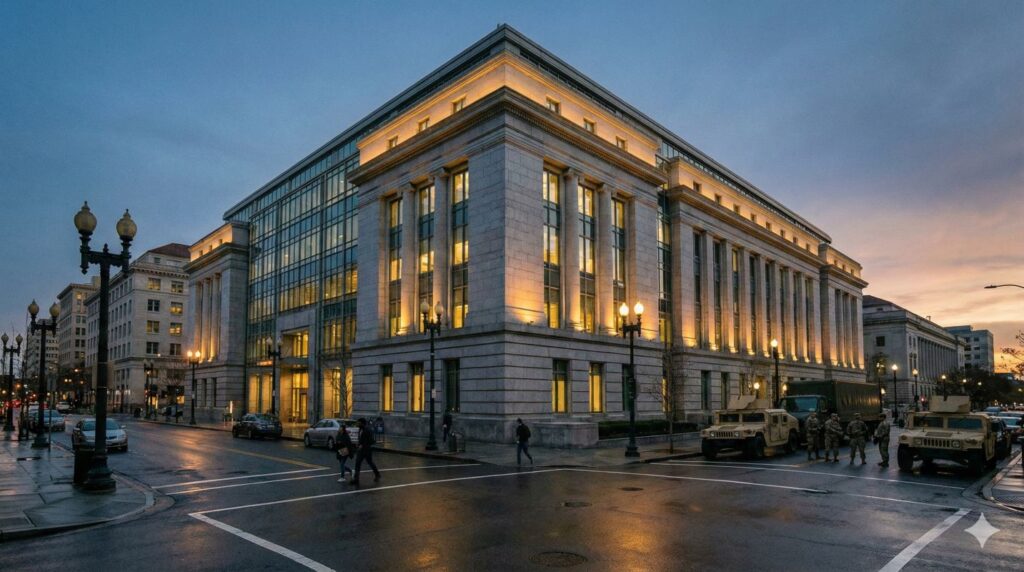
A federal appeals court move in mid-December 2025 sharply limited a National Guard deployment in Los Angeles that the Trump administration had sought to continue under federal control. The result is a split outcome that matters in practice: President Donald Trump remains in command of the federalized California National Guard for now, but the court left in place the district court’s prohibition on using those troops in Los Angeles while the appeal proceeds. California DOJ+2California DOJ+2
The fight is rooted in months of litigation brought by California officials over the National Guard deployment following protests tied to federal immigration enforcement. U.S. District Judge Charles Breyer issued a preliminary injunction on December 10, 2025 ordering the Trump administration to end the Los Angeles mission and return control of the troops to Governor Gavin Newsom, with the order’s effect delayed to allow time for appellate review. AP News+1
Context of the ruling
What the Ninth Circuit did, and what it did not do
On December 12, 2025, the U.S. Court of Appeals for the Ninth Circuit issued an administrative stay order after receiving the government’s emergency motion. The panel granted the stay in part and denied it in part. Specifically, it temporarily stayed the portion of the district court’s December 10 order that directed the federal government to “return control of the California National Guard to Governor Newsom.” In all other respects, the Ninth Circuit denied the requested administrative stay. California DOJ
That detail is the whole story. The appeals court did not wipe out the district judge’s restrictions on the National Guard deployment in Los Angeles. Instead, it preserved the status quo on command-and-control (federal control remains with the president for now) while leaving intact the operative restriction that blocks use of those troops in Los Angeles as the courts consider the larger stay request and the appeal on the merits. California DOJ+1
California Attorney General Rob Bonta described the practical consequence this way: come Monday, there would be no National Guard troops deployed “on the streets of Los Angeles,” even though the decision was not final. California DOJ
What the district court ordered on December 10
The underlying December 10 ruling came from U.S. District Judge Charles Breyer in the Northern District of California. He issued a preliminary injunction ordering the Trump administration to stop deploying the California National Guard in Los Angeles and to return control of the troops to the state, while delaying enforcement to allow time for appellate action. AP News+1
Reporting described Judge Breyer as rejecting the administration’s argument that the president’s decision to federalize and keep state troops in place was essentially beyond judicial review, and as finding insufficient legal justification for continuing the Los Angeles operation as it was being maintained at that point. Reuters+1
Background: how the Los Angeles deployment became a court fight
June 2025 call-up and the continuing dispute
Multiple outlets reported that President Trump federalized thousands of California National Guard troops in June 2025, after protests connected to immigration raids and federal enforcement actions in Southern California. Over time, the number of troops in the area fell substantially, but California continued to challenge the legal basis for extending or renewing the National Guard deployment in Los Angeles under federal authority. AP News+1
In the December 10 decision, the Associated Press reported that Trump’s June action occurred without Governor Newsom’s approval and that California officials argued the continued federal control amounted to an extraordinary use of state Guard forces for a federal mission. AP News
The legal hook: 10 U.S.C. § 12406 and the “unable to execute” argument
California-focused reporting described the Trump administration as relying on 10 U.S.C. § 12406, a statute that permits federalization of a state’s National Guard under certain conditions, including when the president is “unable with the regular forces to execute the laws of the United States.” In that reporting, Judge Breyer rejected the idea that a generalized risk of protest was enough to justify keeping the National Guard deployment in Los Angeles going indefinitely. CalMatters+1
The Ninth Circuit’s administrative stay order did not resolve that statutory debate. The order explicitly said the temporary stay was intended only to preserve the status quo until the stay-pending-appeal motion could be considered, and that it did not decide the appeal’s merits. California DOJ
Legal implications of the appeals court action
A narrow but consequential split
The Ninth Circuit’s partial administrative stay created a two-track reality. First, the president retains federal command over the California Guard members who were federalized. Second, the administration cannot use those troops in Los Angeles while the appeal moves forward, because the court declined to stay the rest of the district court’s order. California DOJ+1
This is why headlines described the decision as both limiting Trump’s use of the Guard in the nation’s second-largest city and not stripping him of control over the troops. It is also why both sides could plausibly claim a partial win: the White House avoided an immediate order to hand control back to the governor, while California maintained the key on-the-ground restriction against the Los Angeles National Guard deployment. California DOJ+1
Judicial review of emergency powers remains the core dispute
One repeated theme in coverage is whether and how courts can review presidential decisions to federalize Guard forces during claimed emergencies. Reuters summarized Judge Breyer as rejecting the administration’s view that the president’s control over state Guard units during an emergency is beyond judicial review, framing the case as part of broader litigation over Trump’s domestic troop deployments in Democratic-led cities. Reuters
The Ninth Circuit’s order did not settle that question, but it shows that appellate judges were willing to leave significant limits in place immediately, even while pausing the specific directive to return command to California.
Political and practical reactions
California’s position
California officials framed the ruling as a meaningful curb on a controversial National Guard deployment in Los Angeles. Attorney General Bonta celebrated the decision as blocking the Los Angeles deployment “for the time being,” even while acknowledging the litigation was not over. California DOJ+1
The administration’s position and the broader pattern
The Trump administration has defended the use of Guard forces in response to unrest and in support of federal operations, and similar disputes have surfaced elsewhere. Reuters and other outlets have described Los Angeles as one of several cities where Trump’s approach to domestic deployments has faced legal challenges. Reuters+1
The Los Angeles case fits within a broader national argument: how often, and under what constraints, federal authorities can use military or quasi-military forces in domestic settings, especially when state and local officials object.
Broader implications for future Guard deployments
The immediate question is whether the Ninth Circuit will grant a fuller stay pending appeal after reviewing the government’s motion, or whether it will keep the Los Angeles restriction in place while the case proceeds. The longer-term question is how courts will define the boundaries of lawful domestic Guard use under statutes like 10 U.S.C. § 12406, and what factual showing is required before a president can maintain a National Guard deployment in Los Angeles—or any major city—over the objections of state leadership. CalMatters+2California DOJ+2
For travelers, residents, and local officials, the practical issue is straightforward: whether armed troops become a sustained feature of civic life in large cities, and whether that choice is subject to meaningful judicial checks.
Bottom line
The appeals court’s mid-December 2025 action did not end the legal fight, but it did set real limits right away. Trump can keep federal control of the California Guard for now, because the Ninth Circuit stayed the portion of the district court’s order requiring control to be returned to Governor Newsom. At the same time, the court left intact the restriction that blocks the National Guard deployment in Los Angeles while the case moves forward. California DOJ+1
That combination—control without permission to deploy in Los Angeles—shows how aggressively courts are scrutinizing domestic troop use and how high the stakes have become when federal authority collides with state control over Guard forces.
Further Reading
Reuters report on U.S. District Judge Charles Breyer ordering Trump to end the National Guard deployment in Los Angeles: https://www.reuters.com/world/us-judge-blocks-trumps-national-guard-deployment-los-angeles-2025-12-10/
Associated Press report on the preliminary injunction ordering the administration to end the National Guard deployment in Los Angeles and return control to California: https://apnews.com/article/a8a201d234d655a7e65fb4c3dd320116
PBS NewsHour report summarizing the district court ruling and the order affecting the National Guard deployment in Los Angeles: https://www.pbs.org/newshour/politics/judge-orders-trump-to-end-national-guard-troop-deployment-in-los-angeles
California Attorney General Rob Bonta press release describing the Ninth Circuit’s partial administrative stay and its effect on the National Guard deployment in Los Angeles: https://oag.ca.gov/news/press-releases/attorney-general-bonta-ninth-circuit-rejects-trump%E2%80%99s-emergency-request-pause
The Ninth Circuit administrative stay order (PDF) in Newsom v. Trump describing what portion of the district court’s order was stayed and what was left in place: https://oag.ca.gov/system/files/attachments/press-docs/Newsom%20v.%20Trump%20-%20CA9%20-%20Admin%20Stay%20Order.pdf
CalMatters background on the legal rationale and the dispute over 10 U.S.C. § 12406 in the National Guard deployment in Los Angeles litigation: https://calmatters.org/justice/2025/12/trump-national-guard-los-angeles-ruling/
Connect with the Author
Curious about the inspiration behind The Unmaking of America or want to follow the latest news and insights from J.T. Mercer? Dive deeper and stay connected through the links below—then explore Vera2 for sharp, timely reporting.
About the Author
Discover more about J.T. Mercer’s background, writing journey, and the real-world events that inspired The Unmaking of America. Learn what drives the storytelling and how this trilogy came to life.
[Learn more about J.T. Mercer]
NRP Dispatch Blog
Stay informed with the NRP Dispatch blog, where you’ll find author updates, behind-the-scenes commentary, and thought-provoking articles on current events, democracy, and the writing process.
[Read the NRP Dispatch]
Vera2 — News & Analysis
Looking for the latest reporting, explainers, and investigative pieces? Visit Vera2, North River Publications’ news and analysis hub. Vera2 covers politics, civil society, global affairs, courts, technology, and more—curated with context and built for readers who want clarity over noise.
[Explore Vera2]
Whether you’re interested in the creative process, want to engage with fellow readers, or simply want the latest updates, these resources are the best way to stay in touch with the world of The Unmaking of America—and with the broader news ecosystem at Vera2.
Free Chapter
Begin reading The Unmaking of America today and experience a story that asks: What remains when the rules are gone, and who will stand up when it matters most? Join the Fall of America mailing list below to receive the first chapter of The Unmaking of America for free and stay connected for updates, bonus material, and author news.
