
Vera2, White House & Politics
New Us Security Strategy Aligns With Russias Vision, Moscow
Dec
US Security Strategy and Its Reflection of Russian Interests
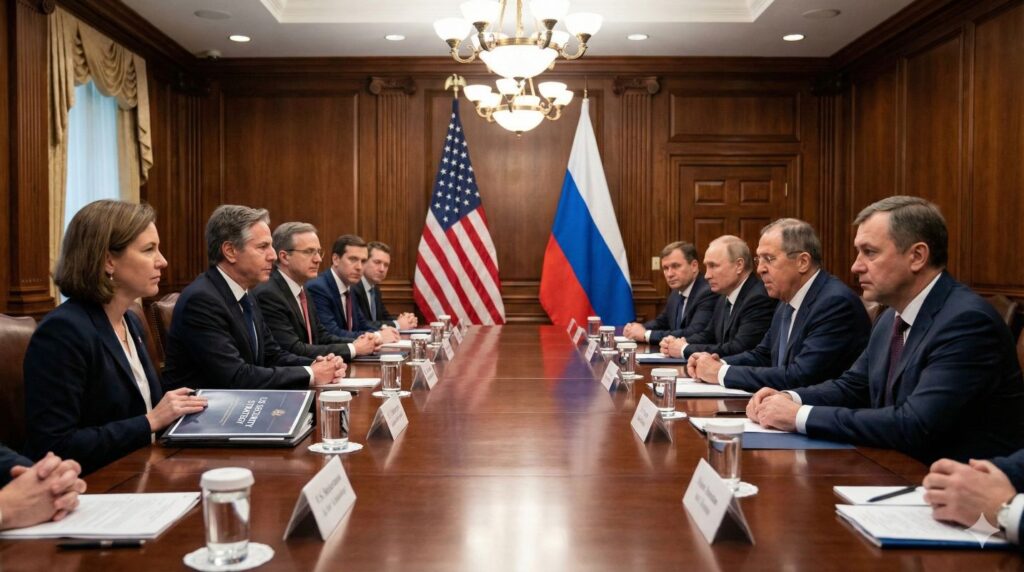
The release of a new US security strategy under President Donald Trump has triggered an unusually positive reaction from Moscow and sharp unease in European capitals. The document, a formal National Security Strategy that lays out Washington’s priorities for the coming years, shifts focus away from treating Russia as a central adversary and directs much of its criticism toward Europe and China instead. The Kremlin has openly welcomed the tone and content of the US security strategy, saying it “largely” matches Russia’s own view of the international order.
The US national security document is more than a routine update. It codifies a broader realignment in American foreign policy: a move toward hemispheric focus, scepticism about long-standing alliances, and a desire to reduce costs associated with overseas commitments. Analysts in Europe, Russia and the United States are now parsing every line of the US security strategy to understand how it will reshape relations with allies and rivals, especially in the context of the ongoing war in Ukraine and rising competition with China.
Overview of the New US Security Strategy
The US security strategy published in early December 2025 sets out a framework the Trump administration calls “flexible realism.” It emphasises a harder-edged version of great-power politics, a revival of the 19th-century Monroe Doctrine to reassert United States dominance in the Western Hemisphere, and a reduced willingness to underwrite Europe’s security in its current form. The document also prioritises deterring China in the Indo-Pacific and calls for “strategic stability” with Russia rather than casting Moscow as a direct enemy, a notable departure from earlier strategies that treated Russia as a principal adversary.
Earlier US national security documents, including those released under Presidents Barack Obama and Joe Biden, framed Russia as a major or acute threat to US and European security, often alongside China. By contrast, the latest US security strategy drops language describing Russia as a “direct threat” and instead presents Moscow as one of several powers with which Washington must manage competition and negotiate rules of the game. Kremlin spokesman Dmitry Peskov publicly praised this shift, calling it a positive step that opens space for cooperation on strategic stability issues.
The US security strategy also devotes considerable attention to Europe’s internal problems. It depicts European states as economically stagnant, over-regulated and facing what the text calls “civilizational erasure” driven by immigration and cultural change. At the same time, it questions whether Europe can remain a vital ally, signalling that Washington expects European governments to shoulder more of their own defence and align more closely with the United States on issues like migration and information policy.
Taken together, these elements give the US security strategy a sharply ideological tone. It blends traditional US concerns about power balances with critiques of European social and regulatory models, while deliberately softening the formal threat language used for Russia. That combination explains why the Kremlin has been quick to embrace the document, even as many European leaders react with alarm.
Kremlin’s Reaction and the Russian Narrative
Moscow’s reaction to the US security strategy has been strikingly warm compared with its response to prior American strategy documents. Peskov said the changes were “largely consistent” with Russia’s own vision of the world and welcomed the explicit call to work with Moscow on strategic stability rather than treating it as a direct enemy. Russian Security Council deputy chairman Dmitry Medvedev likewise highlighted that, for the first time in years, the strategy does not frame Russia as a threat but as a participant in discussions over the future security architecture.
For the Kremlin, this version of the US security strategy appears to validate several long-standing talking points. Russian leaders have argued for years that the global system should move away from what President Vladimir Putin once called a “unipolar” order dominated by the United States toward a multipolar arrangement where Russia, China and other powers have greater influence. Commentaries in Russian and European media have noted that by dropping explicit threat language and emphasising negotiated stability with Moscow, the US strategy document moves at least partway toward that multipolar framing.
At the same time, Russian officials have been careful to express some caution. Peskov and other figures in Moscow have suggested that elements of the US “deep state” might resist or try to dilute the new line in the US security strategy, particularly in areas like arms control, sanctions relief and NATO posture. That scepticism reflects Russia’s experience with past US policy reversals and the reality that a written strategy does not automatically translate into consistent implementation. Russian commentators frequently stress that Washington’s bureaucracy, Congress and the Pentagon can still constrain how far the White House can go in reshaping relations.
How the US Security Strategy Reframes Russia and Europe
The reframing of Russia in the US security strategy sits alongside a much tougher portrayal of Europe. Reporting and analysis in European media describe the document as targeting Europe while sparing traditional adversaries, accusing EU states of weakness and cultural decline and implicitly encouraging political movements that share Trump-aligned positions on migration and national identity. European Council President Antonio Costa publicly warned Washington against interfering in European politics and criticised the strategy’s ideological attacks on EU governance.
For Moscow, this split message is useful. The US security strategy’s emphasis on re-establishing strategic stability with Russia, combined with harsh rhetoric about Europe, reinforces Russia’s narrative that Washington and Brussels are divided and that European capitals cannot rely on unconditional US backing. Russian media and commentators have highlighted passages suggesting that Washington no longer wants to “waste blood and treasure” to contain other powers, reading this as confirmation that the United States is stepping back from its traditional role as guarantor of European security.
However, the document does not amount to an endorsement of Russian policy. The US security strategy still describes the need to prevent any hostile power from dominating Eurasia, and it continues to stress support for Ukraine’s sovereignty, even as Washington pushes for a negotiated settlement to the war. European and Ukrainian officials worry that this combination could translate into pressure on Kyiv to accept a deal closer to Russian preferences, while Moscow hopes to leverage the strategy to gain sanctions relief and recognition of its role in a reworked European security order.
Areas of Overlap and Tension in US–Russia Relations
The new US security strategy identifies several domains where US and Russian interests nominally align. One is strategic stability and arms control. The document calls for preserving and, where possible, updating mechanisms that limit the most destabilising nuclear systems, even as past treaties like New START have come under strain. Russian officials have long said they are ready to discuss “strategic stability” on issues ranging from missile defence to emerging technologies, and the Kremlin has seized on the language in the US strategy document as proof that Washington is again willing to engage on these questions.
Another area of overlap is the shared interest in avoiding a formal Russia–China alliance that could constrain US freedom of action. The US security strategy emphasises competition with China in the Indo-Pacific but also acknowledges the geopolitical consequences of Russia’s deepening relationship with Beijing after Western sanctions. Trump has argued in public remarks that preventing a tighter Russia–China bloc is essential; Russian commentators have pointed to this as evidence that the new strategy document treats Moscow as a potential balancing partner rather than a permanent foe.
Despite these potential areas of convergence, core points of friction remain. NATO enlargement, Western military aid to Ukraine, cyber operations and mutual sanctions still frame much of the relationship. The US security strategy does not recognise Russian claims over occupied Ukrainian territory, and there is no indication that Washington intends to accept Russia’s annexation of Crimea or other regions. European leaders, already uneasy with the document’s tone, are pushing to ensure that any peace plan does not reward territorial aggression or undermine broader principles of international law.
How Allies and Analysts View the New Strategy Document
Outside Russia, reaction to the US security strategy has been sharply critical in many quarters. European think tanks and newspapers describe the text as a political manifesto that undermines decades of bipartisan US support for a rules-based order, in part by downplaying the threat from Russia while attacking EU policies on migration, regulation and digital governance. Policy experts at institutions such as the Atlantic Council argue that the US security strategy signals a retreat from leadership of the “free world” and a move toward a narrower conception of national interest.
In the United States, the response tracks existing partisan divides. Supporters of the administration argue that the US security strategy corrects years of overextension, reduces unnecessary confrontation with Moscow and focuses instead on China and domestic renewal. Critics counter that the document sends mixed signals: it reassures Russia, unsettles allies and may make it harder to build coalitions to deter aggression in Europe and beyond. Commentators warn that an approach framed primarily around nation-state sovereignty and transactional deals could weaken norms that have constrained great-power competition since the end of the Second World War.
For Ukraine, the stakes are immediate. As Washington promotes a revised peace plan that Moscow has signalled it can accept in principle, Ukrainian leaders fear being squeezed between a strategy document that wants to “re-sequence” global priorities and a Russia that hopes to lock in territorial gains. President Volodymyr Zelenskyy and European leaders are meeting repeatedly to coordinate responses and to insist that any settlement include robust security guarantees and accountability for war crimes.
Bottom Line
The new US security strategy marks a clear break with earlier US approaches that treated Russia as a primary strategic threat. By dropping the “direct threat” label and stressing strategic stability and negotiated outcomes, the document moves closer to Russian preferences and has been warmly received in Moscow. At the same time, its harsh language about Europe and its narrow focus on national interest over shared values have alarmed many allies and raised questions about Washington’s long-term role in European security.
Whether this US security strategy ultimately stabilises or destabilises the US–Russia relationship will depend less on the words in the document and more on how they are implemented. If the strategy leads to serious arms-control talks and a durable, just peace in Ukraine, it could reduce the risk of direct confrontation. If it instead deepens rifts with Europe while encouraging Moscow to test Western red lines, the apparent alignment of US and Russian narratives could prove short-lived and dangerous.
Further Reading
Reuters – Kremlin says the new US national security strategy is largely consistent with Russia’s view and no longer brands Moscow a direct threat:
https://www.reuters.com/world/china/kremlin-says-new-us-security-strategy-accords-largely-with-russias-view-2025-12-07/
Al Jazeera – Russia welcomes Trump’s revised strategy document and says it corresponds in many ways to Moscow’s vision:
https://www.aljazeera.com/news/2025/12/7/russia-welcomes-trumps-revised-us-security-strategy
NDTV / Reuters – Kremlin welcomes Trump’s move to stop calling Russia a direct threat and highlights the “flexible realism” approach in the US national security strategy:
https://www.ndtv.com/world-news/kremlin-spokesman-dmitry-peskov-welcomes-us-president-donald-trumps-move-to-stop-calling-russia-direct-threat-9769012
Le Monde – Analysis of how the 2025 US national security strategy targets Europe while downplaying adversaries, including Russia:
https://www.lemonde.fr/en/international/article/2025/12/06/us-national-security-strategy-targets-europe-and-spares-its-adversaries_6748213_4.html
The Moscow Times – Report on Kremlin comments that changes to the US national security strategy are “largely consistent” with Russia’s vision:
https://www.themoscowtimes.com/2025/12/07/changes-to-us-security-strategy-largely-consistent-with-russias-vision-kremlin-a91360
Atlantic Council – Expert commentary on what Trump’s National Security Strategy means for US foreign policy and alliances:
https://www.atlanticcouncil.org/blogs/new-atlanticist/experts-react-what-trumps-national-security-strategy-means-for-us-foreign-policy/
Time – Overview of how Trump’s national security strategy is reshaping US relations with Europe and reframing adversaries:
https://time.com/7339171/trump-national-security-strategy-europe/
Newsweek – Russia welcomes Donald Trump’s new US National Security Strategy and notes its echoes of Moscow’s own views:
https://www.newsweek.com/russia-welcomes-donald-trumps-national-security-strategy-11170196
Connect with the Author
Curious about the inspiration behind The Unmaking of America or want to follow the latest news and insights from J.T. Mercer? Dive deeper and stay connected through the links below—then explore Vera2 for sharp, timely reporting.
About the Author
Discover more about J.T. Mercer’s background, writing journey, and the real-world events that inspired The Unmaking of America. Learn what drives the storytelling and how this trilogy came to life.
[Learn more about J.T. Mercer]
NRP Dispatch Blog
Stay informed with the NRP Dispatch blog, where you’ll find author updates, behind-the-scenes commentary, and thought-provoking articles on current events, democracy, and the writing process.
[Read the NRP Dispatch]
Vera2 — News & Analysis
Looking for the latest reporting, explainers, and investigative pieces? Visit Vera2, North River Publications’ news and analysis hub. Vera2 covers politics, civil society, global affairs, courts, technology, and more—curated with context and built for readers who want clarity over noise.
[Explore Vera2]
Whether you’re interested in the creative process, want to engage with fellow readers, or simply want the latest updates, these resources are the best way to stay in touch with the world of The Unmaking of America—and with the broader news ecosystem at Vera2.
Free Chapter
Begin reading The Unmaking of America today and experience a story that asks: What remains when the rules are gone, and who will stand up when it matters most? Join the Fall of America mailing list below to receive the first chapter of The Unmaking of America for free and stay connected for updates, bonus material, and author news.
