
NRP Dispatch, Behind the Fiction
Political Thrillers and Voter Suppression
Feb
People argue about voter suppression as if it is always obvious. Many people picture intimidation at a polling place or a headline about fraud. That happens sometimes, but more often than not, suppression shows up as friction that certain voters have to absorb and other voters do not.
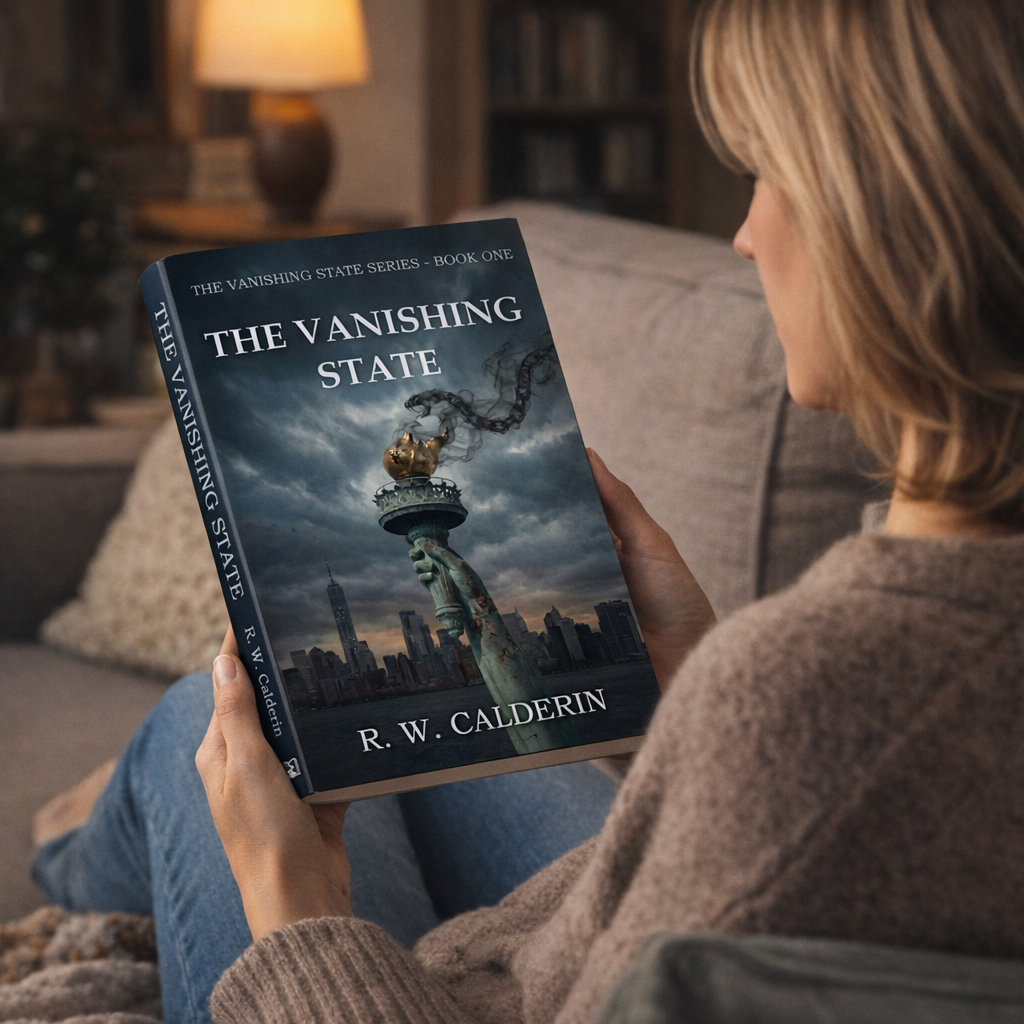
That is why I wrote The Vanishing State the way I did. The story is not about a single dramatic act that cancels an election. It is about a system that makes voting harder for targeted groups, then calls the outcome “normal.”
What voter suppression looks like in real life
Modern voter suppression is usually a set of choices about access. Those choices can be defended as administrative decisions, but they still shape who participates.
Common examples include stricter voting rules, changes to registration requirements, reduced early voting options, and limits that increase the time and effort required to vote.
Another lever is polling place access. Closing polling locations or consolidating them into fewer sites often means longer travel, longer lines, and less flexibility for voters who cannot take time off work or arrange childcare.
Long lines are not just an inconvenience. Research has found that waiting longer to vote reduces the likelihood of voting in the next election. MIT’s Election Lab has also reported research showing that exposure to news stories depicting long lines can discourage future voting.
None of these tactics require someone to say “we are suppressing the vote.” They work because they can be framed as rulemaking, budgeting, logistics, or “integrity.”
Why parties try to suppress votes
The blunt reason is that it can be easier than persuasion.
If a party believes higher turnout harms its chances, it has an incentive to reduce turnout among groups likely to vote against it. That incentive does not require conspiracy. It only requires a political environment where winning is tight and the cost of changing positions is higher than the cost of changing rules.
Suppression also has a communications advantage. It can be sold as “election security,” even when the burden falls on eligible voters. Civil rights and voting organizations have documented how these measures can be justified as fraud prevention while creating barriers that disproportionately affect certain communities.
What it means for a democratic country when disenfranchisement becomes normal
A democracy depends on legitimacy. People accept outcomes they dislike when they believe the process was fair and broadly accessible.
When major actors openly push rules that predictably block or deter eligible voters, the country starts paying a long-term cost. People stop trusting that elections reflect the electorate. They disengage. They assume the system is rigged. That becomes a feedback loop, because lower participation makes future suppression easier to defend.
In the United States, debates over access intensified after the Supreme Court’s 2013 decision in Shelby County v. Holder, which invalidated the Voting Rights Act’s coverage formula for preclearance. The practical effect was to remove a key federal guardrail that had required certain jurisdictions to get approval before changing election rules.
You do not have to agree on every policy question to see the risk here. If political power can be protected by shrinking the electorate, that incentive will keep getting used.
How The Vanishing State uses this idea
In The Vanishing State, voter suppression is not carried out by a cartoon villain. It is carried out through a system called Veltrix.
Maria Langston worked on Veltrix. She understands how it runs and how it can be tuned. In the story, Veltrix gets repurposed to influence elections by pushing targeted voters into “verification” holds, delaying registrations in review queues, and creating ballot problems that cannot be resolved before deadlines. The system produces paperwork that looks legitimate. That is the cover. If a voter loses their ballot or misses a deadline, the system can point to a rule and call it user error.
That is why the characters who fight back are not spies. They are working professionals. Maria can read the technical trail. A VA doctor and a nurse can see what the data decisions do to people who have limited time, limited money, and limited ability to navigate an appeal process that moves too slowly to matter.
The conflict in the book is not just political. It is personal. When voting becomes a series of obstacles, the burden lands on families, on patients, and on people who already have less room to absorb setbacks.
The part that worries me most
The most corrosive shift is not a single restrictive law. It is the moment when large parts of the country start treating disenfranchisement as an acceptable tactic, as long as it helps “their side.”
If a party believes it can win by blocking enough voters, it will keep doing it. The tactics will evolve. They will migrate from physical access to administrative processes, then into software, data sharing, and risk scoring. That is not science fiction. That is how large institutions operate when incentives are aligned and oversight is weak.
Fiction gives me a way to show that mechanism from the inside, through people who recognize what is happening and have to decide whether they can live with their own participation in it.
Read the book
If you like plausible political thrillers with tech realism and fast escalation, The Vanishing State is built for you.
Buy direct (eBook): https://northriverpublications.com/product/the-vanishing-state-book-1/
Amazon (Kindle eBook and Paperback): https://www.amazon.com/dp/B0GFFCQRCT
