
Author Notes, NRP Dispatch
What Is a Political Thriller?
Jan
What Is a Political Thriller?
A political thriller is suspense built around power. Not the abstract kind, but the kind that moves through elections, courts, agencies, media, and enforcement. The story is driven by pressure inside institutions and what people do when the rules still exist but stop protecting everyone equally.
If you are exploring political thriller fiction and want a simple overview of the genre, start here: political thriller.
Political thrillers tend to feel closer to real life than other thrillers because the danger is not supernatural and not random. The threat is structural. It comes from systems that still call themselves legitimate while they begin to serve narrower interests.
The Point of a Political Thriller
Political thrillers are not just stories where politicians appear. They are stories where institutions create the suspense.
The conflict is usually about legitimacy. Who gets to decide what is lawful. Who gets protected. Who gets targeted. Who controls the narrative when the facts become inconvenient.
A strong political thriller also treats consequences seriously. People do not walk away clean. Institutions do not reset at the end of the chapter. Once power shifts, it leaves marks.
What Political Thrillers Usually Focus On
Most political thrillers revolve around a few repeating pressures.
One is procedure. The rules are followed on paper, but outcomes are shaped through loopholes, timing, and selective enforcement.
Another is justification. Harm is framed as necessary. Overreach is framed as temporary. The language stays calm even when the actions are not.
A third is compliance. Ordinary people are asked to participate in small ways. Each step seems defensible. Later, it becomes hard to say where the line was crossed.
That is why the genre can feel unsettling. It does not rely on surprise twists. It relies on recognition.
Political Thriller vs Spy Thriller vs Dystopian Fiction
These genres overlap, but they do not create tension in the same way.
Spy thrillers often center on covert operations. The protagonist is usually acting outside normal institutions, even when working for one. The story runs on secrecy, missions, and external threats.
Dystopian fiction usually begins after the break. The regime is obvious. Daily life is governed by new rules. The story explores survival inside a changed world.
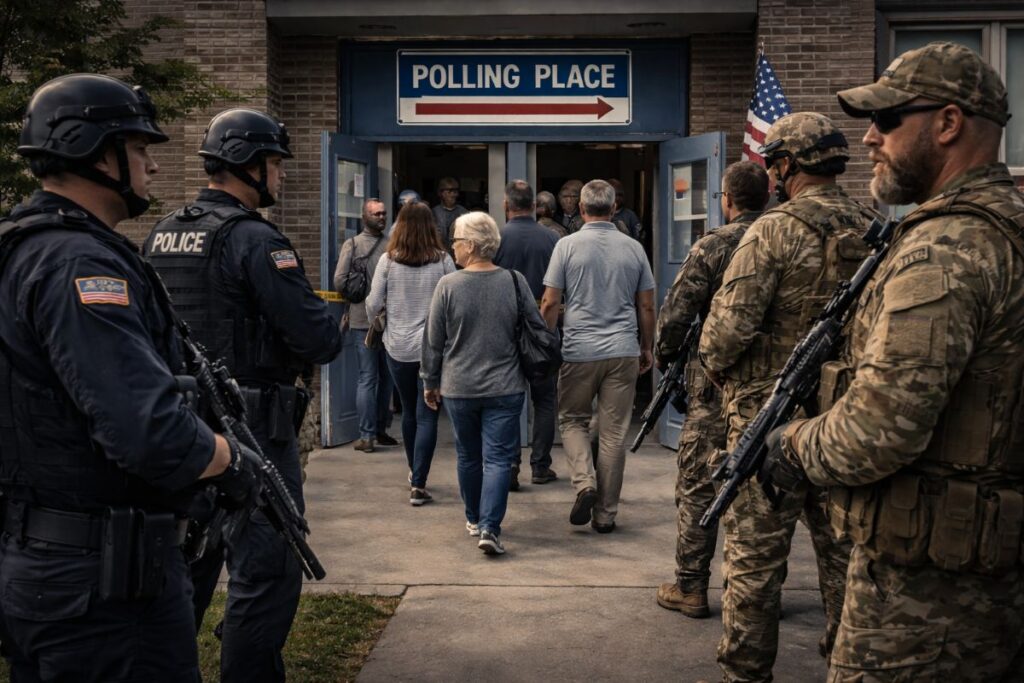
Political thrillers sit earlier on that timeline. The institutions still function. Elections still happen. Courts still issue rulings. Many people still assume the system is stable. The suspense comes from watching the machinery shift while public life looks normal.
What Makes the Genre Feel Plausible
Political thrillers work when incentives make sense.
Institutions protect themselves. Careers matter. Public messaging matters. Risk gets managed, not eliminated. People make compromises because they believe the alternative is worse.
This is also why simplistic villains do not fit the genre well. Real systems rarely announce themselves as corrupt. They rationalize. They legalize. They normalize.
When a political thriller is done well, the fear is not that the story is extreme. The fear is that the steps feel believable.
Why Political Thrillers Feel Especially Relevant Right Now
This genre gets sharper when trust in institutions weakens.
When people disagree about legitimacy, enforcement, and information, political thrillers stop feeling theoretical. They begin to feel like a map of familiar pressures.
Modern political thrillers often explore how democracies degrade without a single breaking day. Power can shift through law, policy, and administrative action. It can also shift through fatigue and resignation. The public does not have to be convinced. The public only has to be tired.
That is not partisan. It is structural. It is the kind of drift that happens when people stop believing the system will correct itself.
What Readers Usually Want From Political Thriller Novels
Readers who seek political thrillers tend to want credibility.
They want institutions that behave like institutions. They want dialogue that sounds like people speaking in rooms where decisions get made. They want consequences that do not vanish after the climax.
They also tend to prefer restraint. Overheated language and easy moral certainty can break the spell. This genre is strongest when it stays grounded and lets the reader draw the conclusion.
If a book relies on a single genius who sees everything and fixes everything, it is usually not a political thriller. It is a different kind of story.
The Near Future Political Thriller
Near future political thrillers remove distance. The setting is familiar. The institutions look recognizable. The language used to justify extraordinary actions sounds plausible.
That is why this subgenre can hit harder. The fear does not come from a far away world. It comes from a world that looks like the present with a few pressures turned up.
These stories often focus on procedure and normalization. They show how a system can stay orderly while becoming less fair. The collapse is not a spectacle. It is a sequence.
Is a Political Thriller For You
If you like thrillers that create suspense through institutions and legitimacy, political thrillers are a strong fit.
You will probably enjoy the genre if you are drawn to stories about elections under pressure, enforcement that becomes selective, and narratives that are shaped in real time.
If you want a curated overview of political thriller fiction and a modern series that leans into procedural realism, continue here: political thriller novels.
